
Drawing african mask art as an Act of Connection
There is a moment late at night, when the studio is quiet and the only sound is the nib of my pen catching the paper, that I feel closest to where I come from. That is usually when I am working on a mask. For me, drawing african mask imagery in pen and ink is one of the most direct connections I have to a heritage that runs far deeper than my own biography.
I am Kenal Louis — born in Haiti, raised between Florida and Nebraska, a Haitian-American artist whose roots trace back through the African diaspora. Putting these faces on paper is not just a stylistic choice. It is a way of reaching back toward something that was carried across water and across generations, something that still moves through the work I make today.
What I Feel When Drawing african mask Forms
When I sit down with one of these forms, a particular quality of attention comes over the whole process. The mask face is never simply a face. It is a vehicle — for ceremony, for spiritual communication, for identity within a community. Engaging with it means engaging with all of that, not just the surface appearance.
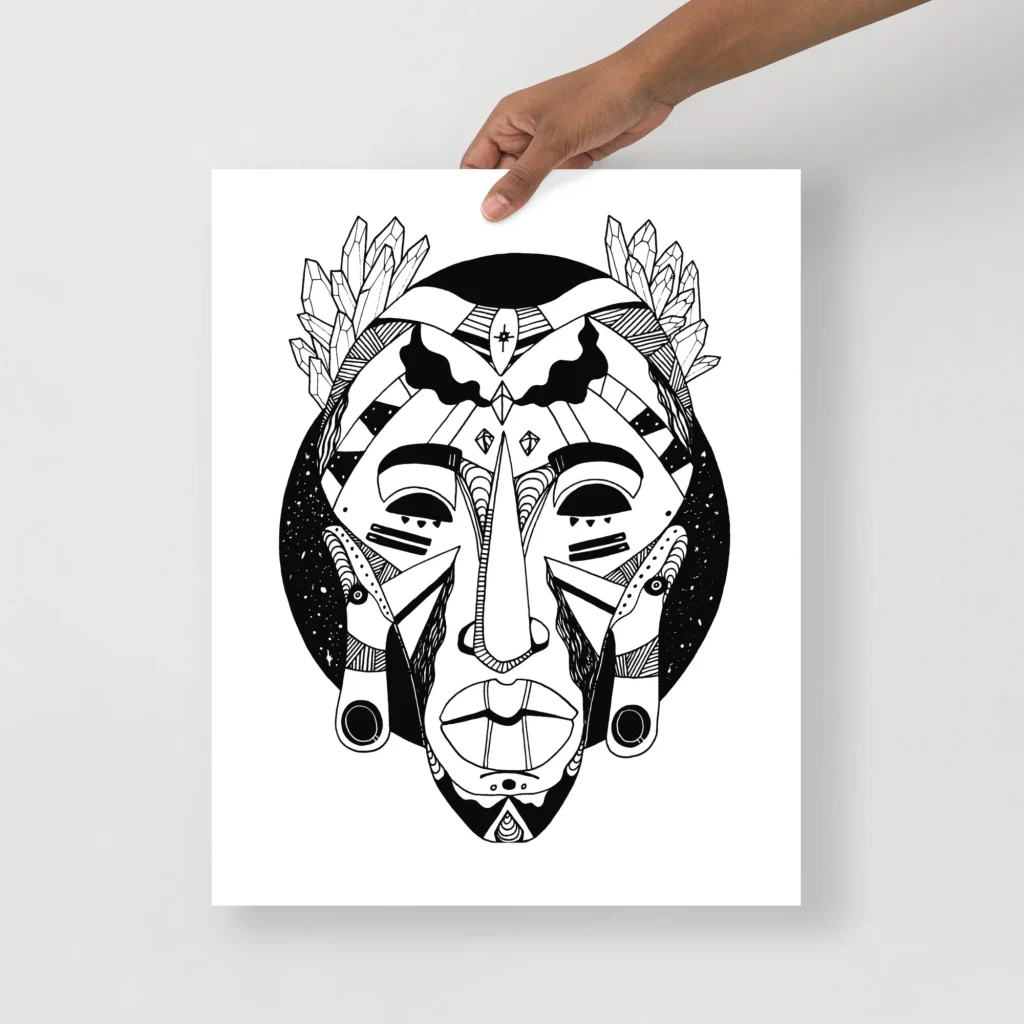
I always start with the structure: the elongated or broad proportions, the placement of the eyes, which in many traditions signal the kind of vision the mask is meant to embody — inward, outward, cosmic, ancestral. Then come the patterns. The crosshatched textures. The geometric fills that cover every plane of the surface. The careful linework that African mask design uses to define the nose and the lips. Every mark is deliberate. Nothing is decorative for its own sake.
Each session feels like its own kind of conversation with the tradition — a slow, attentive dialogue carried out in ink on paper. I am rarely in a hurry when I am in it. The work asks me to slow down, and I am happy to oblige.
The Cultural Responsibility I Carry
I am also always thinking about the responsibility that comes with this subject. These mask traditions belong to specific cultures with specific histories and specific purposes for the objects themselves. Honoring that means staying genuinely curious and respectful, never simply reaching for a striking visual effect.
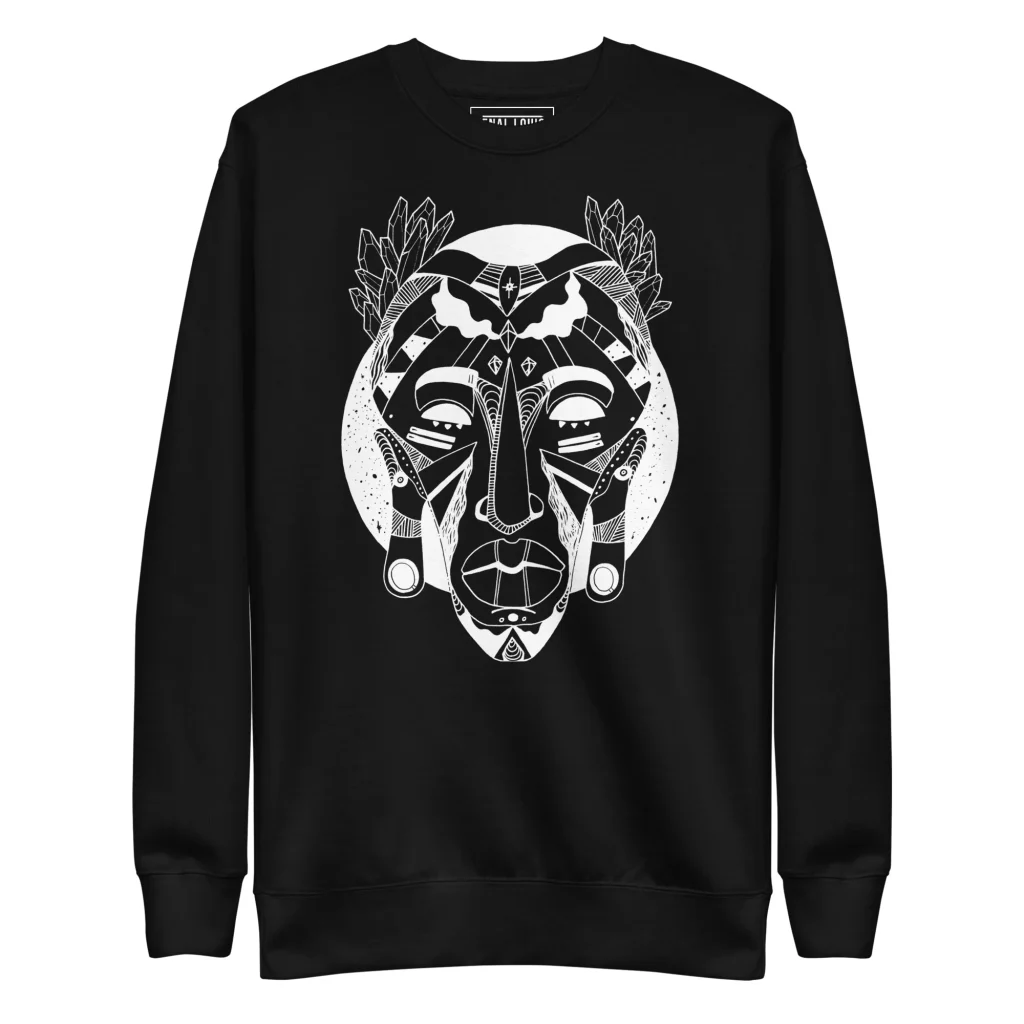
African Mask Sweatshirt - White Line Art Afrocentric Pullover
And there is no getting around the fact that drawing african mask art as a Black artist carries a different weight than it would for someone outside that heritage. It becomes a way of claiming a visual tradition — of saying, this belongs in my art because it belongs in my story. There is something grounding in that. A sense of rightness I feel in the work itself, in the way the lines finally settle on the page.
Black and White Keeps It Honest
I chose to work in black and white African mask art because it keeps the focus on what matters most — the form, the symbol, the geometry. Color would risk turning the piece decorative. Black and white keeps it essential. It keeps it close to the weight and gravity the subject deserves.
To my mind, working in black and white pen and ink gets me as close as my medium allows to the directness of the original carved form. The carved mask does not rely on color. It relies on shape, on shadow, on the depth of the relief. Pen and ink honors that same logic, and I trust it for that reason.
What This Practice Requires of the Artist
Doing this well asks for qualities that are not usually filed under technical illustration skill. It asks for cultural curiosity — a real desire to understand what you are drawing from, not just what it looks like. It asks for patience, because the density of geometric pattern work in these illustrations cannot be rushed. And it asks for humility, an ongoing awareness that you are working with material that belongs to traditions far larger and far older than any one artist’s practice.
I try to bring all three to the table. The curiosity shows up in the specificity of the forms I choose and the care with which I render them. The patience shows up in the linework — the tight crosshatching, the repeating fills, the fine detail that builds across the surface over many hours. The humility shows up in how I talk about it. I do not claim to be the definitive interpreter of these traditions. I am an artist engaging with them seriously, with genuine respect, and with a personal stake in keeping that visual heritage alive and visible.
Being a Black artist adds one more dimension to all of it. The work is not only artistic engagement — it is also a quiet act of cultural reclamation, a way of asserting connection to a heritage that was for too long either ignored or borrowed from without care. Every piece I finish feels like a small act of restoration.
Bring Home Art Made Through This Connection
My mask prints are available as fine art prints, canvas wall art, and apparel. All editions are limited — so if a piece speaks to you, now is the time to bring it home. And if there is someone in your life who feels the same pull toward heritage and bold, intentional art — a parent, a best friend, a partner just settling into a new home — a piece like this becomes a gift that carries real meaning, not just decoration for a wall.
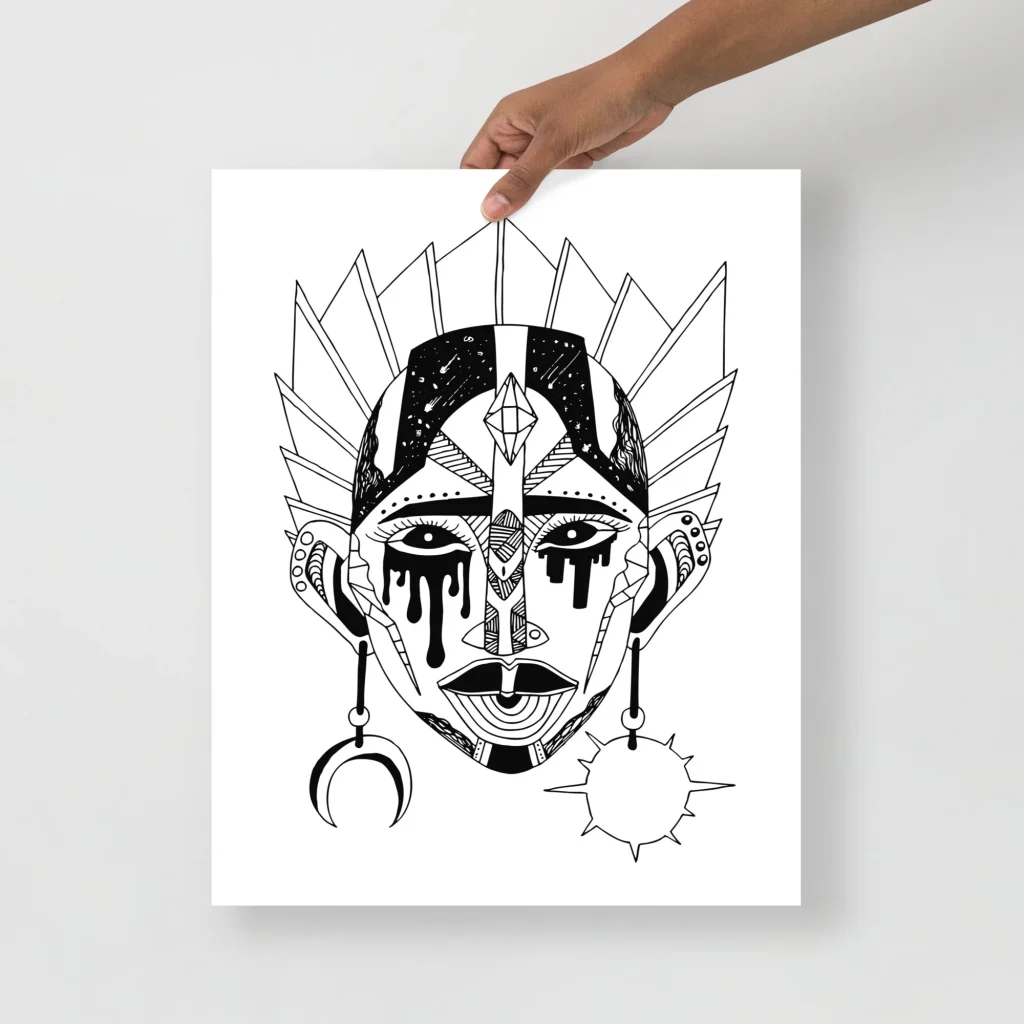
Support Black Art, Support African Heritage
Visit kenallouis.com/ and find the mask print that belongs in your space. Every purchase supports original, hand-drawn work made in honor of African culture by a Black artist who is truly creating for the culture.
I hope that whatever you choose finds its place — on your wall, in your hands, or wrapped up for someone you love. That, to me, is the work continuing the way it always should: passed forward, person to person.