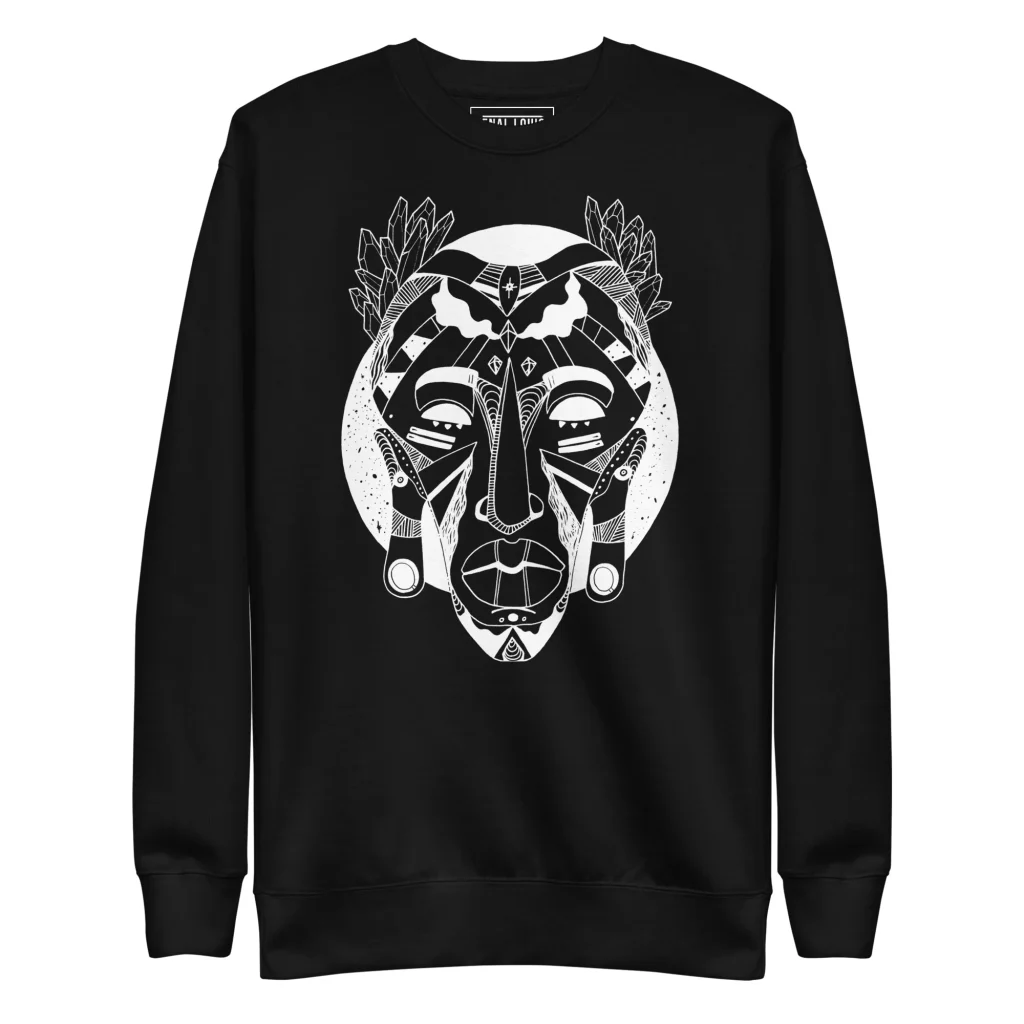
Black and White african art That Commands Every Room
There is a particular feeling I want someone to have when they bring one of these pieces home — a quiet jolt of recognition, the sense that the wall just gained a presence it did not have before. Black and white african art is one of the most powerful aesthetic choices you can make for a wall that matters, and it is exactly where all of my pen and ink mask work lives.
My decision to work in stark contrast was not casual. It was philosophical. Color can be used to steer emotion, to make something feel warm or cool, inviting or distant. But removing color forces the viewer to engage with form, geometry, and symbol directly, with nothing in the way. And when the subject is the african mask tradition — which already communicates through exactly those elements — the choice becomes almost inevitable.
Why This Approach Works So Powerfully
It works for the same reason the traditional mask form worked in its original context: it strips the image down to its essentials. The geometry of the face. The patterns that fill every surface. The headdress forms that signal spiritual identity. All of it communicates directly, without color acting as a middleman between the maker and the eye.
There is also a timelessness here that color illustration simply cannot match. This kind of work does not look dated in five years. It does not feel tied to a passing design trend. It looks like something that has always been there — ancient and immediate at the same time.
That is exactly what the african mask tradition actually is: ancient and immediate, rooted in something that existed long before anyone admired it for its aesthetic qualities, and still carrying the full weight of that original purpose into every room it enters today.
What My Mask Illustrations Look Like
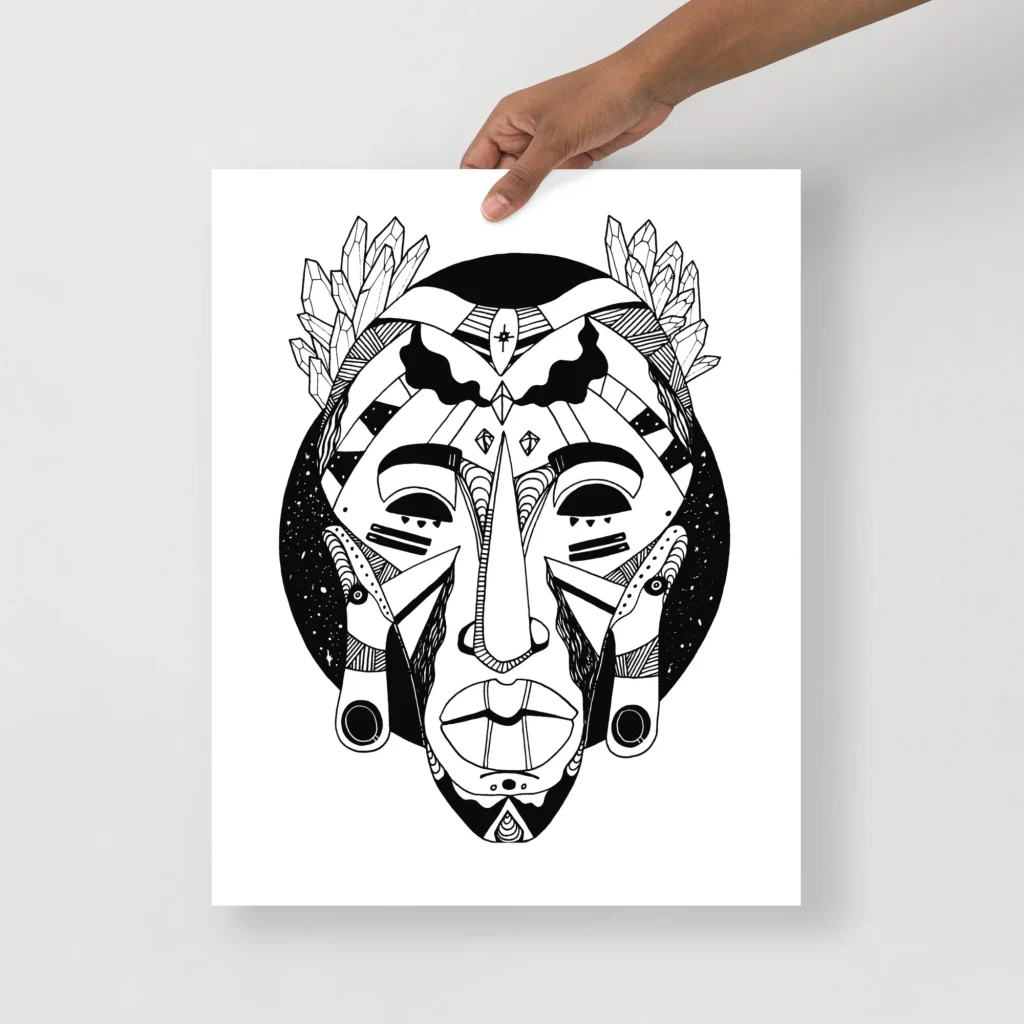
My black and white African art consists of pen and ink mask illustrations drawn entirely by hand. You will find bold, geometric faces set against deep black circular backgrounds, elaborate crystal and feather headdresses, and dense surface patterns covering every plane of the face. The energy of ceremony and cultural identity is rendered in stark ink on white paper — nothing added, nothing hidden.
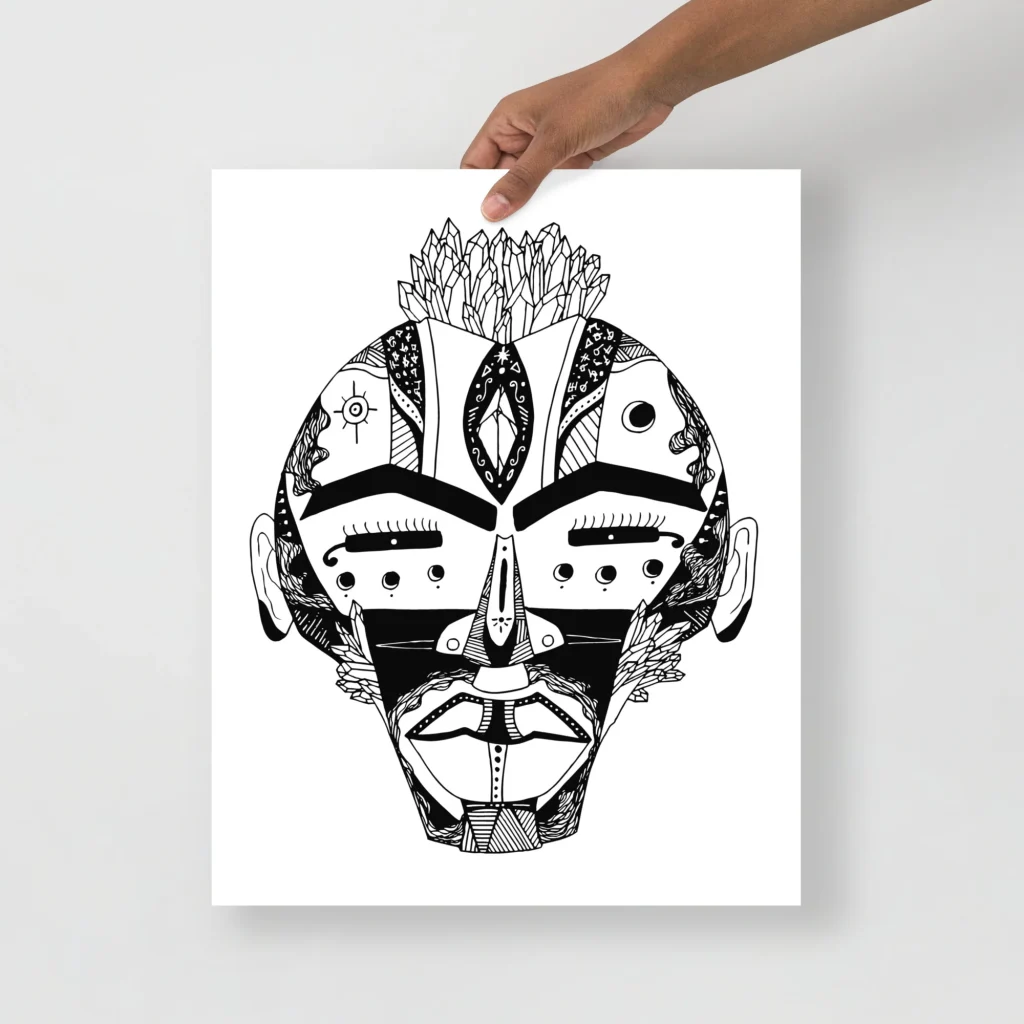
Each piece in the collection carries its own distinct energy. The African Mask Art Print – Tribal Pen Ink Drawing brings the raw immediacy of hand-drawn linework to the foreground, every stroke visible and intentional. The African Mask Art Print No. 4 Tribal Wall Art pushes the geometric language further, with layered patterning that rewards a long, close look. Together they show the range this tradition can hold — commanding authority, grounded structural power, and a visual complexity that keeps pulling the eye back for another pass.
Limited Edition, Made by Hand
What truly sets this work apart is that it is made by hand. No AI. No digital generation. Every line is a deliberate human choice. Every pattern is placed with intention. And every print is reproduced from an original hand-drawn illustration in limited edition runs — once they sell out, they are gone. That is not a marketing line; it is simply how I work. The originals exist once, and the editions are finite. When you own one, you are holding a finite piece of something I made with my own hands.
This is also part of why these pieces become such meaningful gifts. I have had people pick one up for a sibling moving into a first apartment, for a parent redoing a study, for a friend who has been quietly chasing a dream. I once helped someone choose a print for his sister who had just bought her first home and wanted her walls to say something about where she comes from — the right time, the right person, the right wall. A gift like that says you saw someone clearly.
The Long Tradition Behind the Work
Choosing to work this way connects my art to a long tradition within the African art world itself. Many of the most powerful African visual traditions worked in stark, high-contrast formats — carved objects where the darkness of the wood and the lightness of incised marks created bold geometric imagery. Bark cloth paintings with strong black-on-light patterns. Ndebele murals built entirely from high-contrast geometric design. These traditions never needed color to make their claim on the viewer. They understood that contrast and geometry, handled with intention, are among the most forceful tools any maker has.
So black and white African art, in my hands, is not just an aesthetic preference — it is an alignment with the formal logic of African visual culture, which has always known that what you leave out can be just as powerful as what you put in.
In a contemporary home, this work carries a particular authority that color illustration often does not. It makes a stronger visual claim. It asks more of the viewer. And it signals that the image is confident in its content — not leaning on color to make its impression. That confidence is one of the qualities that makes this work so compelling on a wall, and it is something I think about consciously every time I put pen to paper.
Shop the Collection at kenallouis.com/
My work is available as fine art prints, canvas wall art, and apparel — including the African Mask Sweatshirt – White Line Art Afrocentric Pullover, which brings the same hand-drawn mask imagery into your everyday wardrobe. Visit kenallouis.com/ and find the piece that belongs on your wall or in your closet. That quiet jolt of recognition I mentioned at the start — that is the moment I am always working toward. Every purchase supports a Black artist creating for African heritage and culture.