
African Masks Examples That Honor the Tradition Honestly
A tall ceremonial face, crowned with a headdress built from hundreds of deliberate ink strokes — that is where my hand goes first when I sit down to draw. Too many african masks examples in contemporary art fall into one of two traps: they treat the masks as exotic objects torn from their context, or they flatten them into generic “tribal” decoration that erases the real types of African masks and the cultural meaning behind each one.
My pen and ink illustrations are my attempt to do neither. I engage with the visual language of the tradition seriously, render it with genuine craft, and present it as the sophisticated cultural achievement it has always been.
What My Collection Actually Shows
The pieces in this collection each speak a slightly different visual dialect within the larger masking tradition. They are not interchangeable — each one carries its own logic.
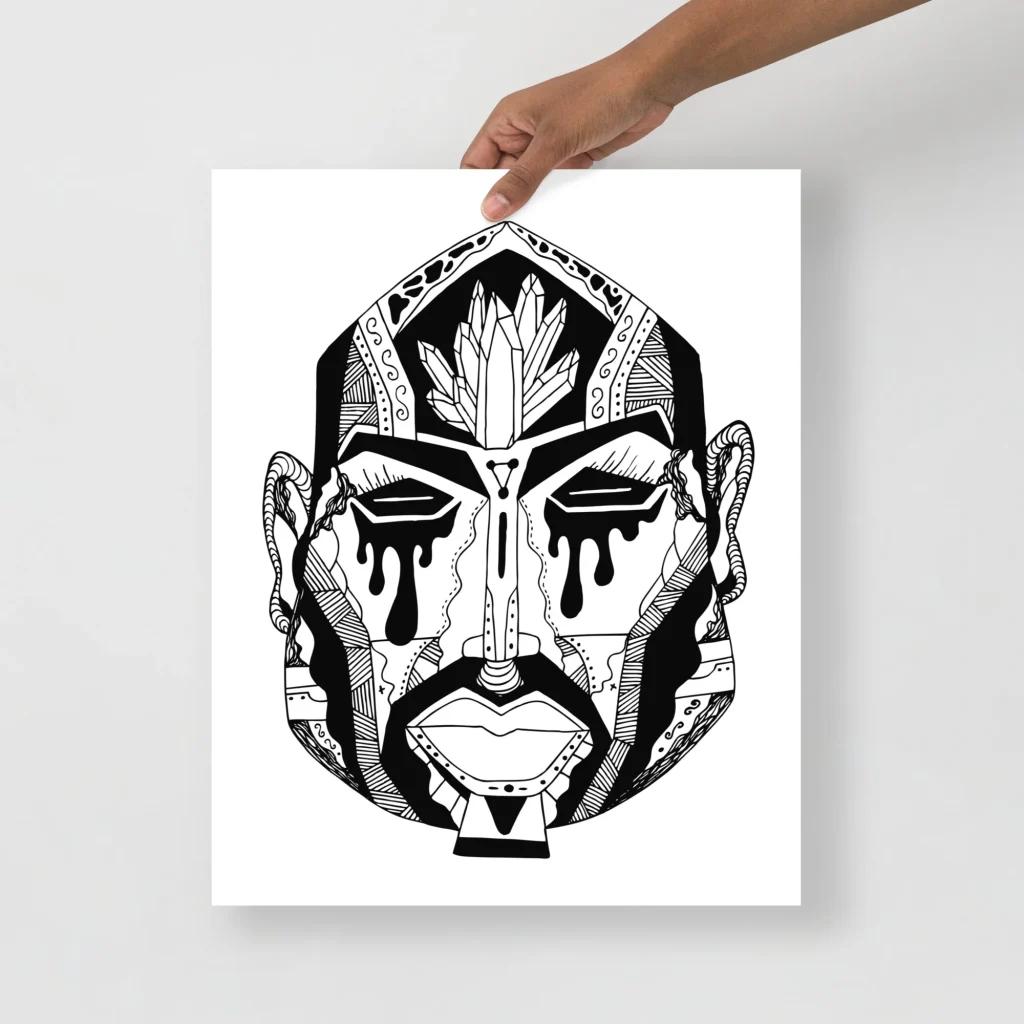
Take African Mask Art Print No. 9 Tribal Wall Art. It is a tall, vertical face with an elaborate headdress rendered entirely in dense, intentional pen strokes. The elongated proportions and the intricate linework across the crown feel ceremonial, communicating something above and beyond the ordinary world. In West African masking traditions, height and headdress complexity signal spiritual authority, and I wanted that sense of elevated presence to live in every single line.
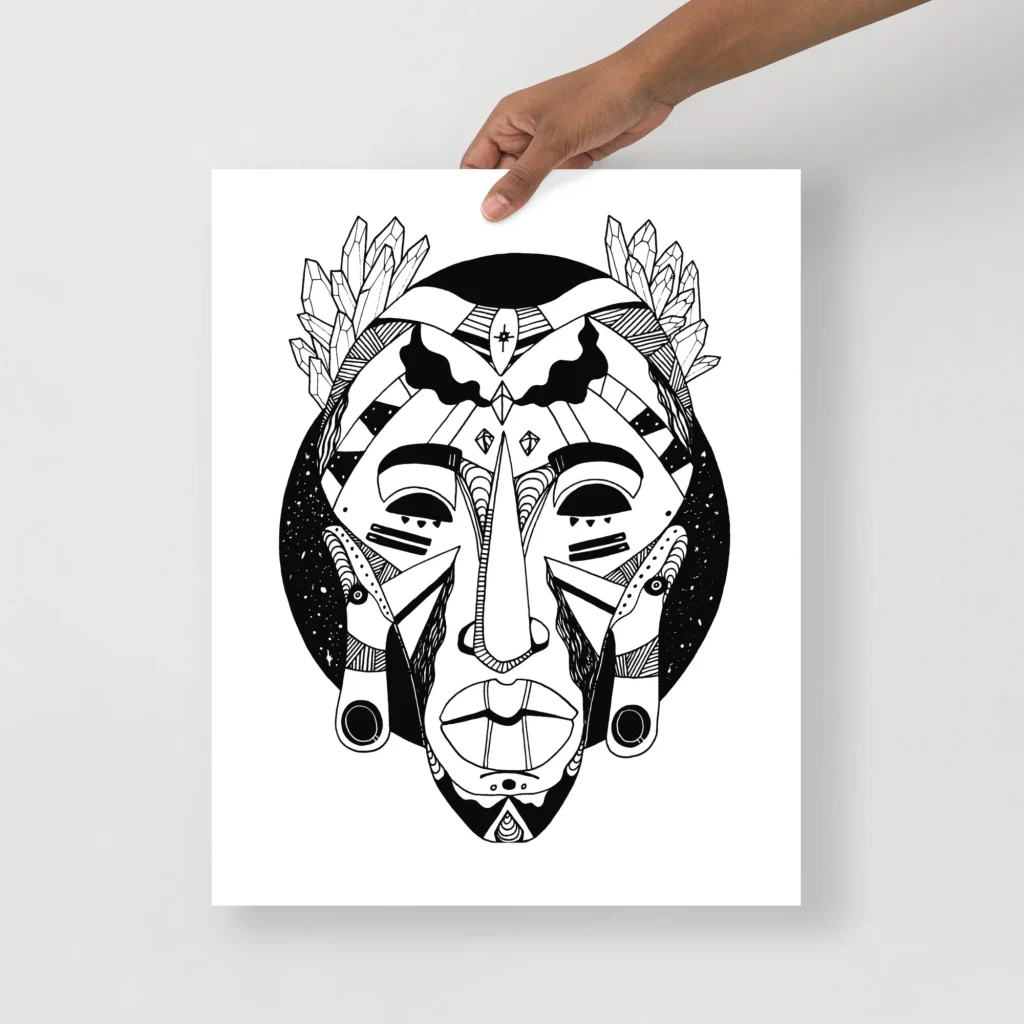
Then there is African Mask Art Print – Tribal Pen ink drawing, which takes a broader, more African mask types architectural form with dominant geometric fills and structural complexity. The face is wider, the features more symmetrically arranged, and the overall visual weight feels grounded and communal rather than reaching upward. These are the masks of collective identity — forms that represent a people rather than a single spiritual intermediary. Pen and ink suits this piece especially well, because the hatching and cross-hatching across the planes of the face give it a solidity that feels almost carved.
A third piece, African Mask Art Print – Orange and Black Tribal Wall Decor, brings in color for the first time in this series. I paired a bold orange against deep black to create something that feels both ancient and immediate. The contrast is striking without being decorative for its own sake. The orange reads almost like firelight or earth pigment, which ties the piece back to the material traditions of African masking culture in a way that feels earned rather than imposed.
How These Pieces Were Made
Every drawing in this group begins with drawing African masks by hand — pen on paper, line by line, with no digital shortcuts and no AI assistance. The process is slow and deliberate, which is exactly as it should be for work that is trying to honor a tradition of skilled human making. I work in fine-tipped pens, building tone through hatching, cross-hatching, and stippling until the surface of the face has the density and presence I am after. There is no erasing here, no undoing — every mark is a commitment, and I have to mean it.
All of these prints are limited edition, too. Once a run is sold out, it is gone for good. These are not casual products thrown together for a wall. They are carefully made, limited objects that carry the visible evidence of real craft and genuine cultural respect. When you hold one of these prints in your hands, you are holding something that took real time and real attention to bring into the world.
Why Black and White Works So Well Here
For most of this series I chose to work in black and white, and that choice was anything but arbitrary. Black and white African mask art in this format reflects, more honestly than anything else, what the mask tradition is truly about — form, symbol, and direct visual communication without the softening or distraction of color. African masks in their original context draw their power from structure and symbol, not from surface decoration. Black and white pen and ink respects that priority.
Rendered this way, these african masks examples carry the essential power of the tradition in the most direct manner possible. The absence of color forces both the artist and the viewer to engage with the underlying geometry, the proportional relationships, and the symbolic details that give each mask its meaning. When color does appear — as in the orange and black piece — it carries that much more weight precisely because it is the exception rather than the rule.
How My Work Relates to Real Mask Traditions
Everything in this collection is rooted in real visual traditions rather than invented aesthetics. The tall ceremonial mask draws from West African face mask traditions where elongated proportions and elaborate headdresses signal high spiritual status. The geometric, architectural mask draws from traditions where structural forms were used to represent collective rather than individual identity — the mask as a vessel for community rather than a single spirit. The bold, high-contrast orange and black piece leans on the cosmological and ceremonial color symbolism found across multiple African masking traditions, where specific hues carry specific cultural meanings.
These are not random formal choices — they are conscious engagements with specific visual vocabularies that have real cultural histories. Yes, I interpret them through my own pen and ink sensibility, but they keep their roots in the actual traditions they reference. I am not inventing some “African aesthetic” out of thin air — I am studying real forms and rendering them with the tools and discipline I have spent years developing.
This grounding in real traditions is what gives the work its weight. Purely decorative illustrations carry no such information. When you look at the specific proportions of the ceremonial mask, the structural geometry of the tribal pen ink drawing, or the deliberate color choices in the orange and black piece, none of those details are arbitrary. They reference real practices and real visual languages that have been developed and refined over centuries. That groundedness is what lifts this work from wall decoration to cultural art. It is the difference between borrowing a surface look and actually engaging with what you are drawing from.
Shop My african mask Prints at kenallouis.com/
Visit kenallouis.com/ and find the African mask print that belongs in your home. A piece like this also makes a meaningful gift — for a sister honoring her heritage, a friend who appreciates handmade work, or anyone furnishing a new space who wants something with real history behind it. Every purchase supports a Black artist making original, human-made work in honor of African culture and heritage.
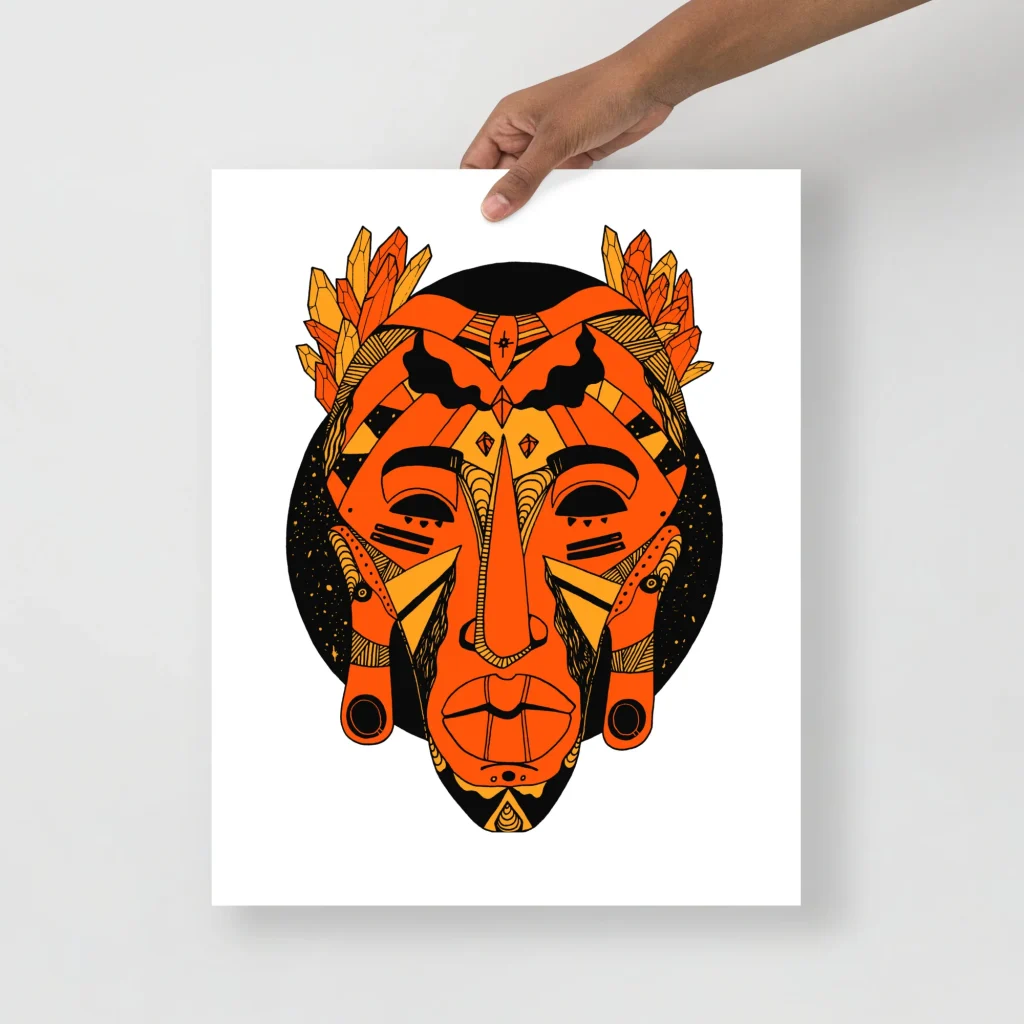
African Mask Art Print - Orange and Black Tribal Wall Decor
My hope is simple: that one of these masks hangs somewhere quiet in your home and reminds you, every time you pass it, of the depth and dignity of the tradition it comes from.