
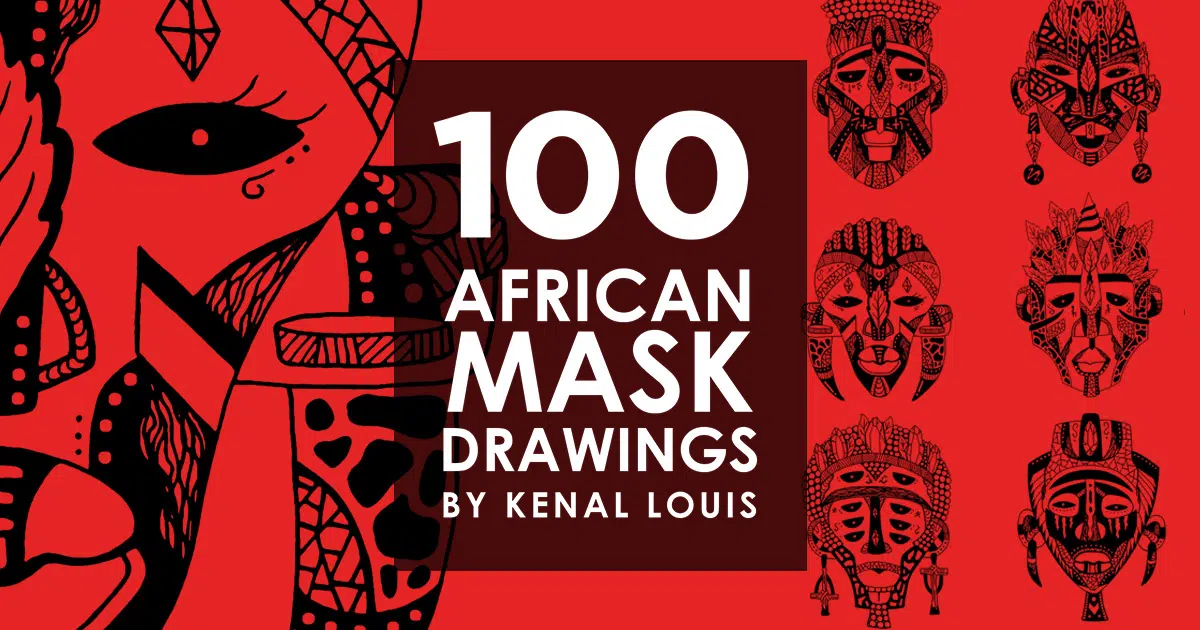
What is a mask really hiding, and what is it brave enough to reveal?”
That was the question circling in my head the first time I sat down to draw one. Oscar Wilde once wrote that a mask tells us more than a face, and I think he was right. To me, African masks are powerful portals between worlds — places where carved wood and drawn lines become bridges to something far greater than ourselves.
So let me share why I committed to creating one hundred of these pieces, and why these original African mask art prints keep pulling at my soul long after the ink has dried.
Why This African Mask Art Speaks to Me
When I sit down to make an African mask drawing, I’m not simply laying lines on paper. In fact, I’m sitting with thousands of years of spiritual tradition and cultural memory. Every stroke carries the weight of ancestors who understood something we often forget — that masks were never decorative objects. They were living things, made to carry a person from one state of being into another.
So in this collection I’ve reimagined those traditional forms through bold geometry, working in deep reds and warm browns that seem to pulse with ancestral energy. These aren’t just illustrations to me. They are my quiet meditations on identity, heritage, and the beautiful endurance of contemporary African mask art.
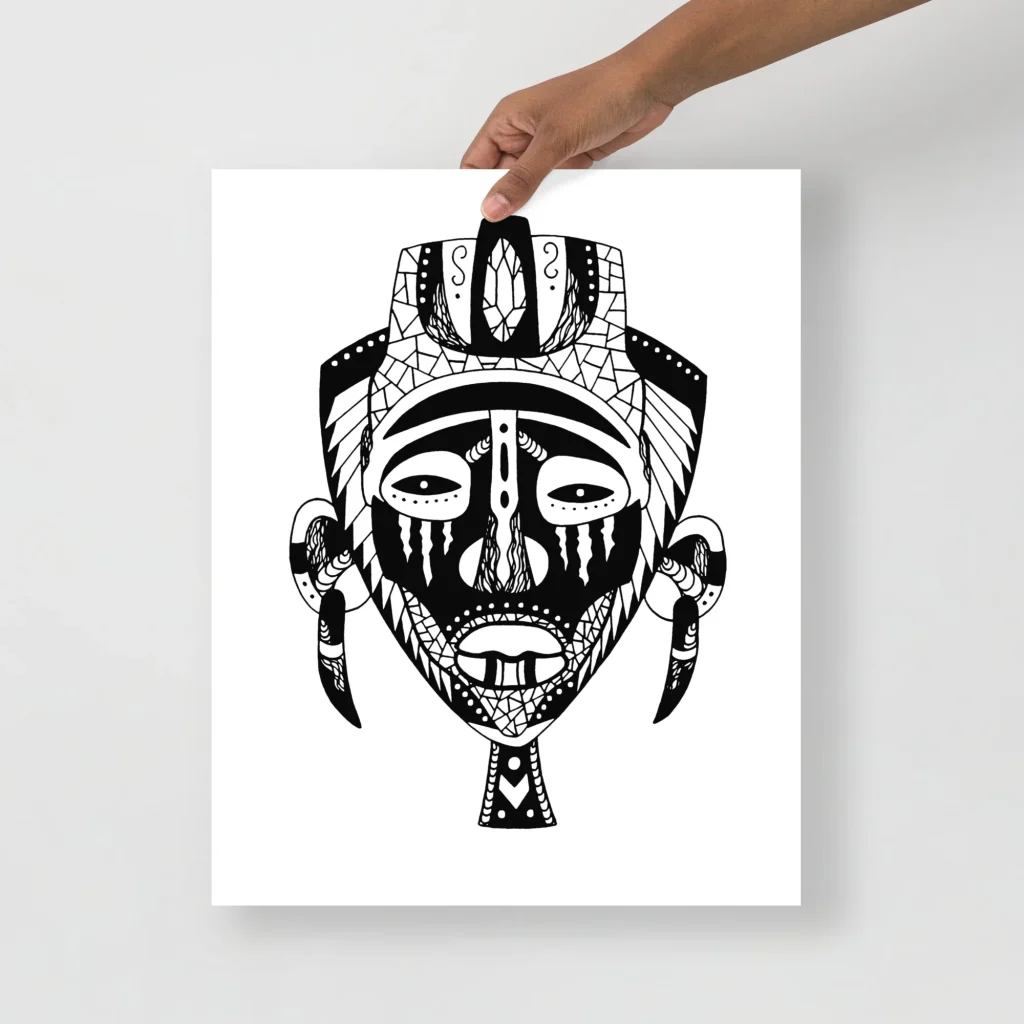
African Mask 95 of 100
The Visual Language Behind Each African Mask Drawing
Over this journey, I’ve come to understand that every element in my hand-inked mask artwork is speaking its own language. So my job is to listen first and translate second.
Lines become materials. I lean on varying line weights to suggest rough wood grain, the soft tangle of raffia fibers, or the cold sheen of beaten metal. Therefore, when I render ceremonial horns, I’m carrying over their protective spirit through deliberate marks.
Patterns encode wisdom. The geometric designs are never purely ornamental. However, each shape carries cultural information — clan identities, spiritual weight, layers of meaning I’ve studied with respect. This same reverence runs through all of my traditional African tribal art.
Capturing Ceremony in Stillness
One of the hardest parts of this work is conveying movement inside a still image. A physical mask comes alive in performance — drums pounding, dancers spinning, a whole community gathering. On paper I have none of that sound, so I chase the same energy through composition and the tension in my lines.
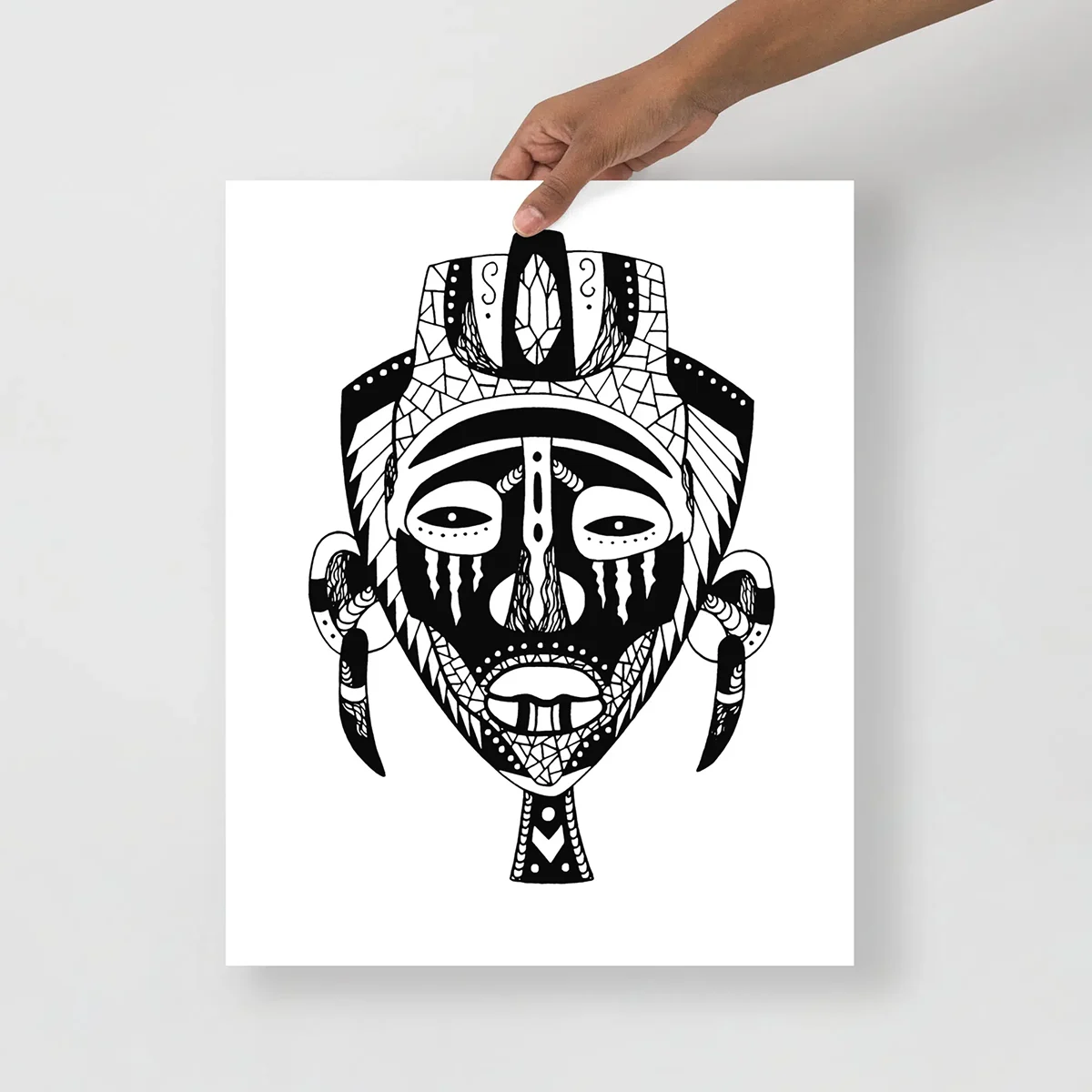
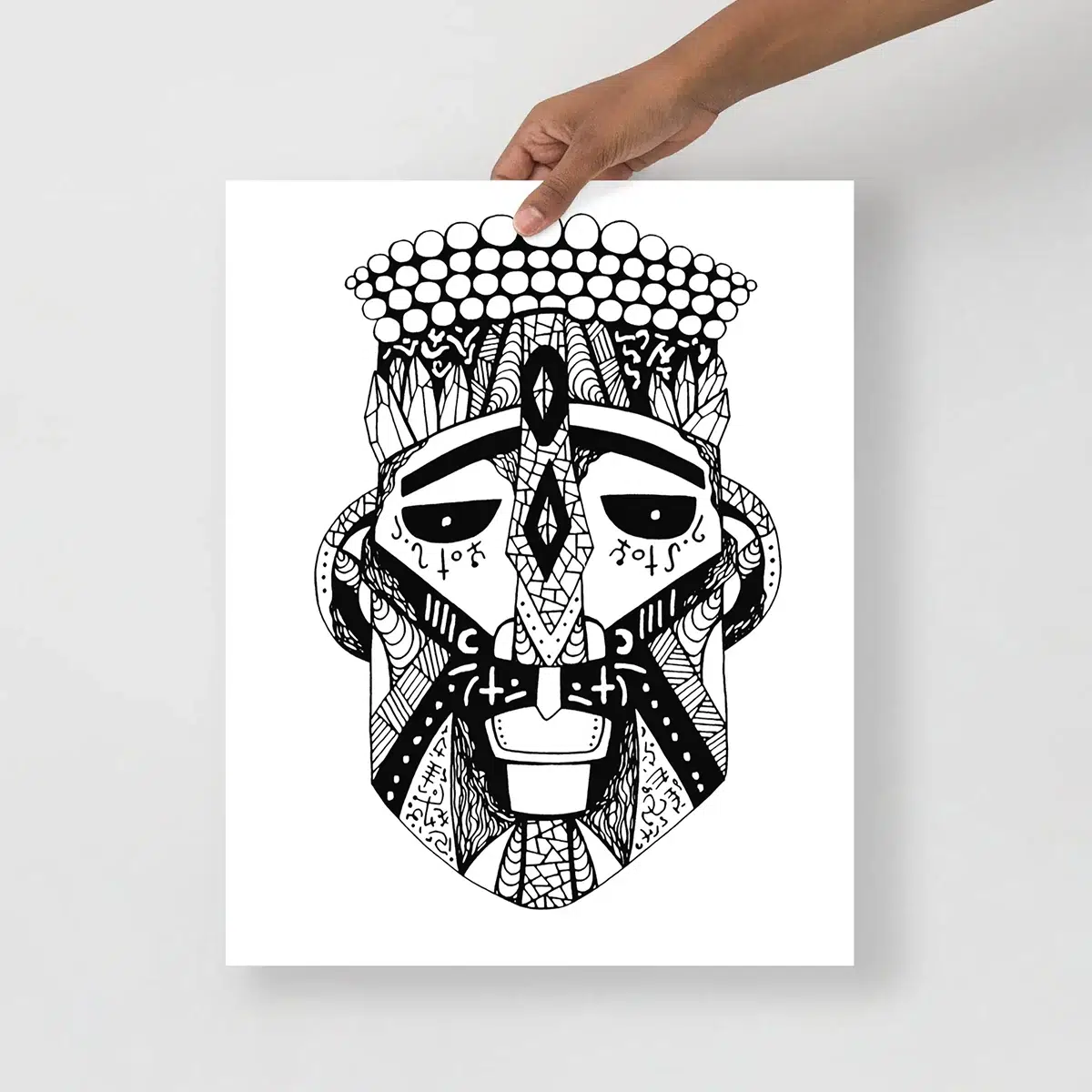
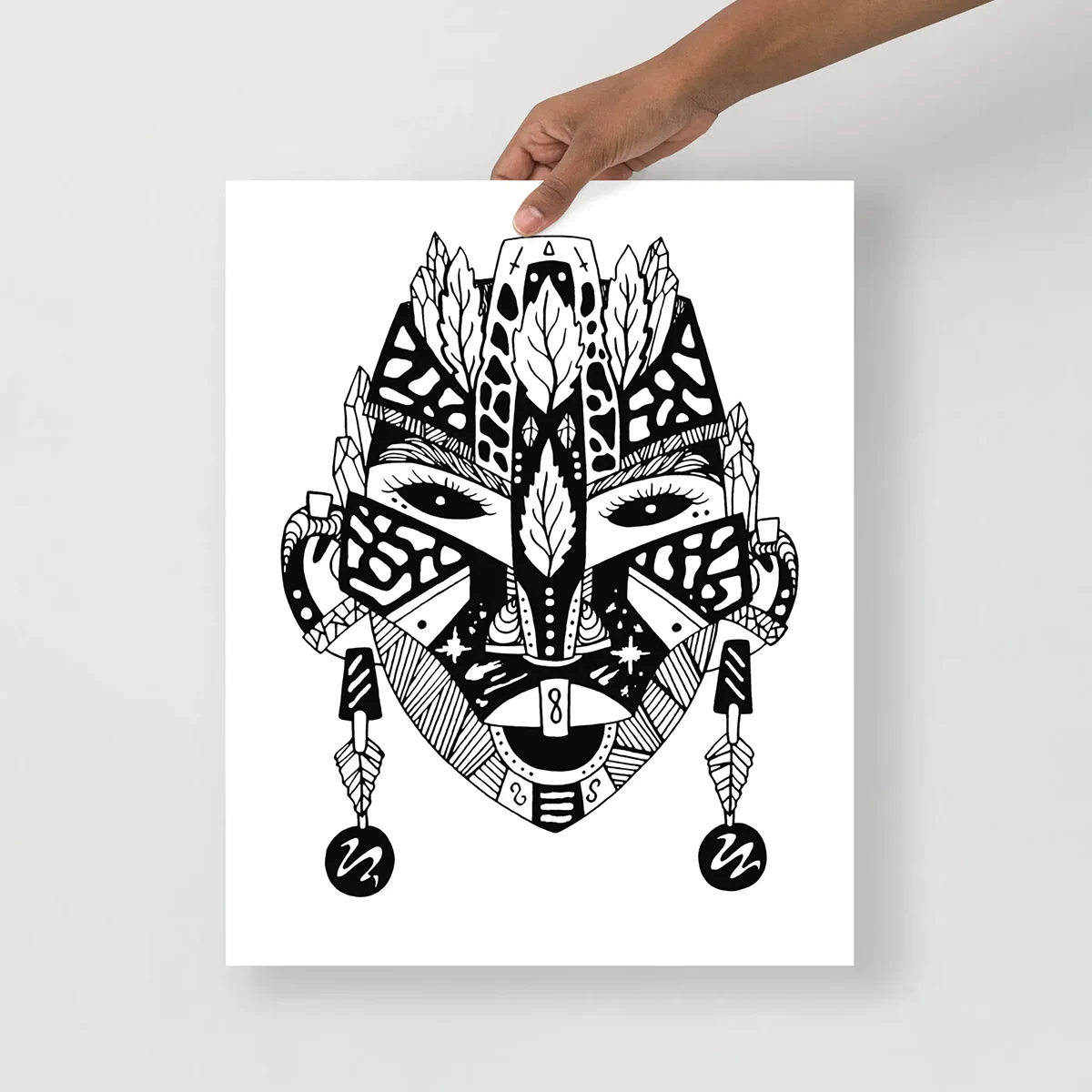
Look closely at masks 95 through 98. Do you notice how the patterns seem to vibrate? How the eyes appear to track you across the room? None of that is accident. Truly, I want you to feel the ceremony held inside one quiet image on your wall.
African Mask 96 of 100
My Contemporary Conversation With Tradition
As a contemporary artist, I’ve never tried to copy a traditional mask line for line. What I’m really doing is holding a conversation with these forms. So each piece in this series of one hundred is my own answer back — honoring the essence of the original while speaking in a visual language that still feels alive.
I’ve spent countless hours studying masks from the Baule, Dogon, and Yoruba cultures. But I always bring my own eye to the page, building abstract African tribal mask art that keeps its spiritual depth while feeling fresh and present. You can also see how the series took shape in the story behind this series.
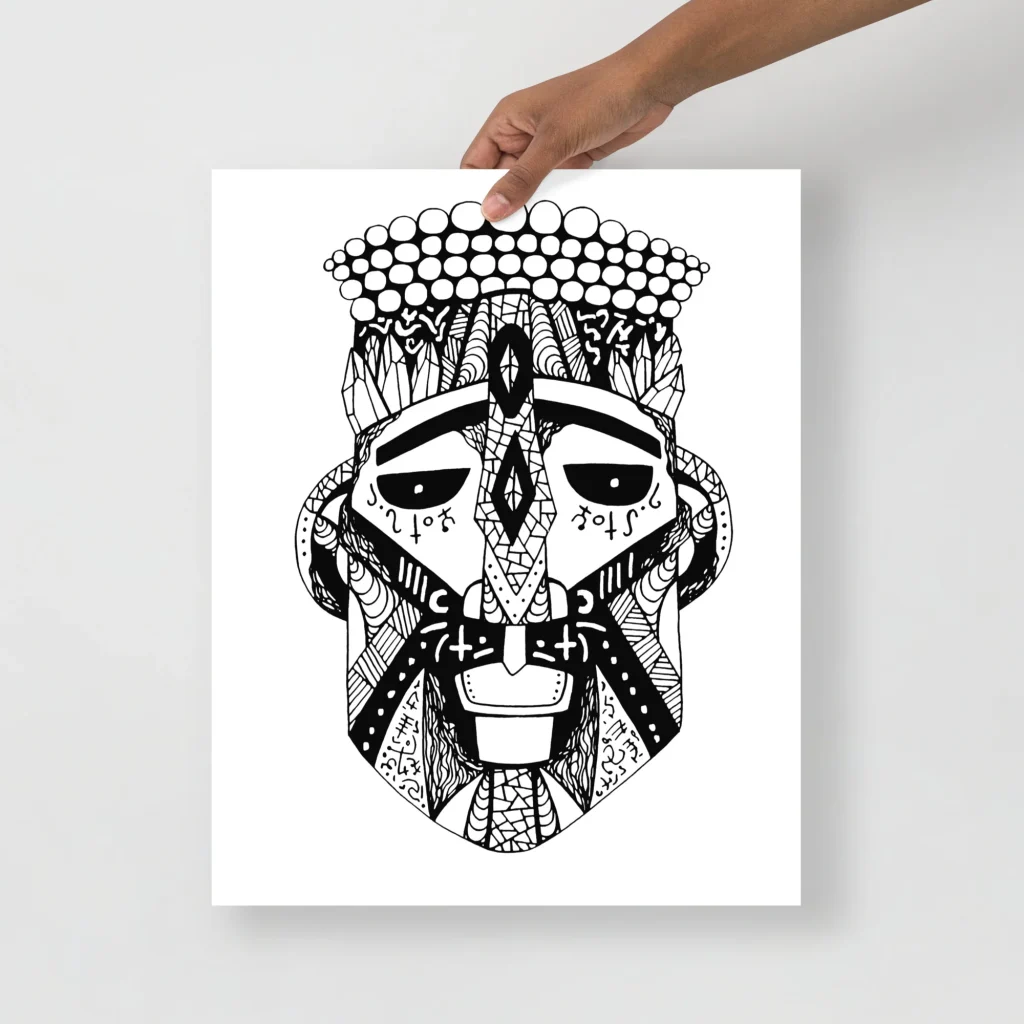
African Mask 97 of 100
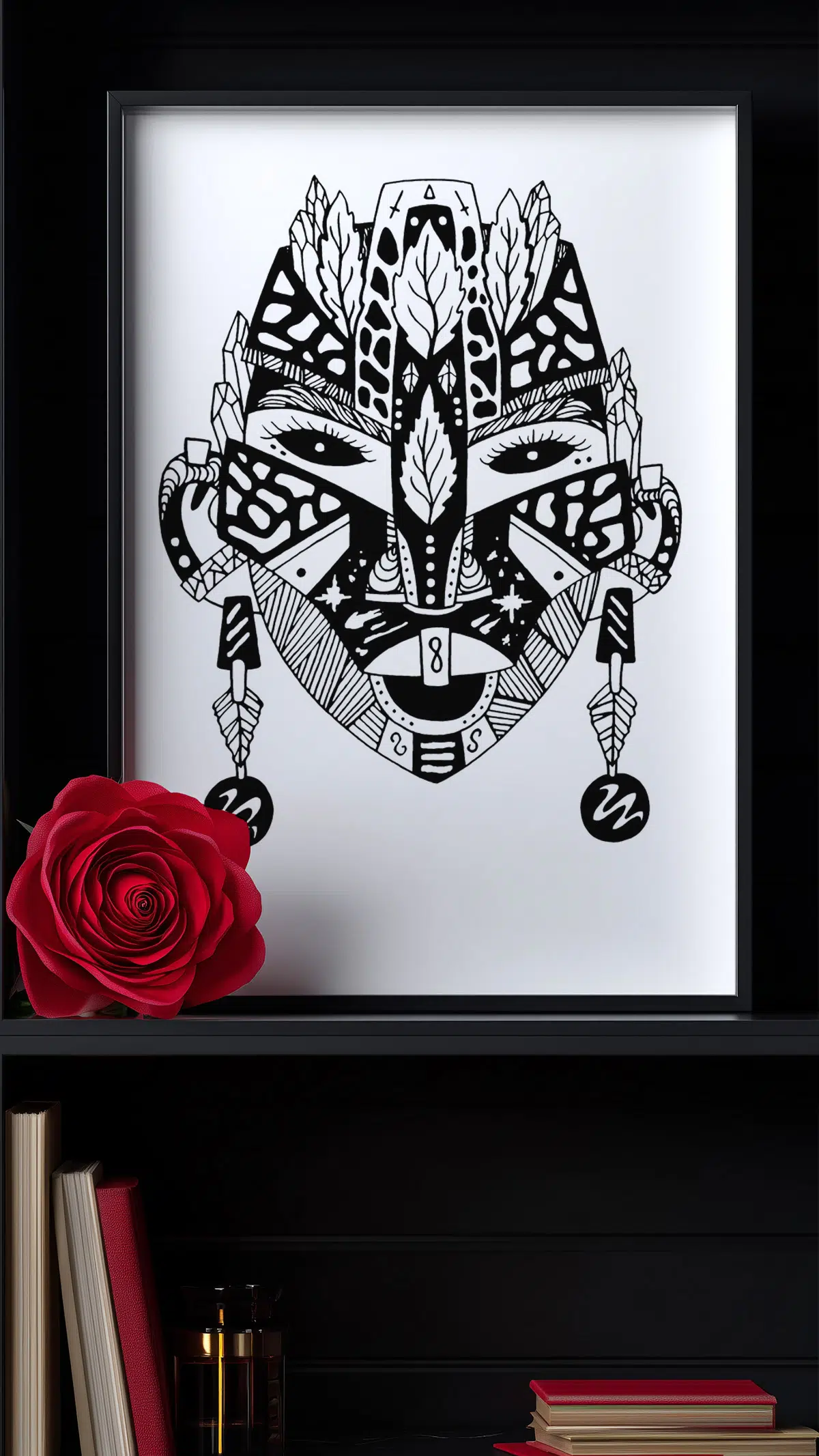
Who This African Mask Wall Art Is Really For
So who hangs a piece like this? In my experience, it’s the person building a home that reflects their roots. It’s the collector who wants African mask art with real weight, not a mass-made poster. For them, my African mask canvas wall art becomes the anchor a whole room is built around.
Moreover, these pieces make a meaningful gift — for a friend stepping into a new home, for someone reconnecting with their heritage, or for anyone drawn to art that carries presence. Every print is made for grown collectors who want their walls to say something true. The same designs live on a t-shirt or sticker too, if you want to carry the art beyond the wall.
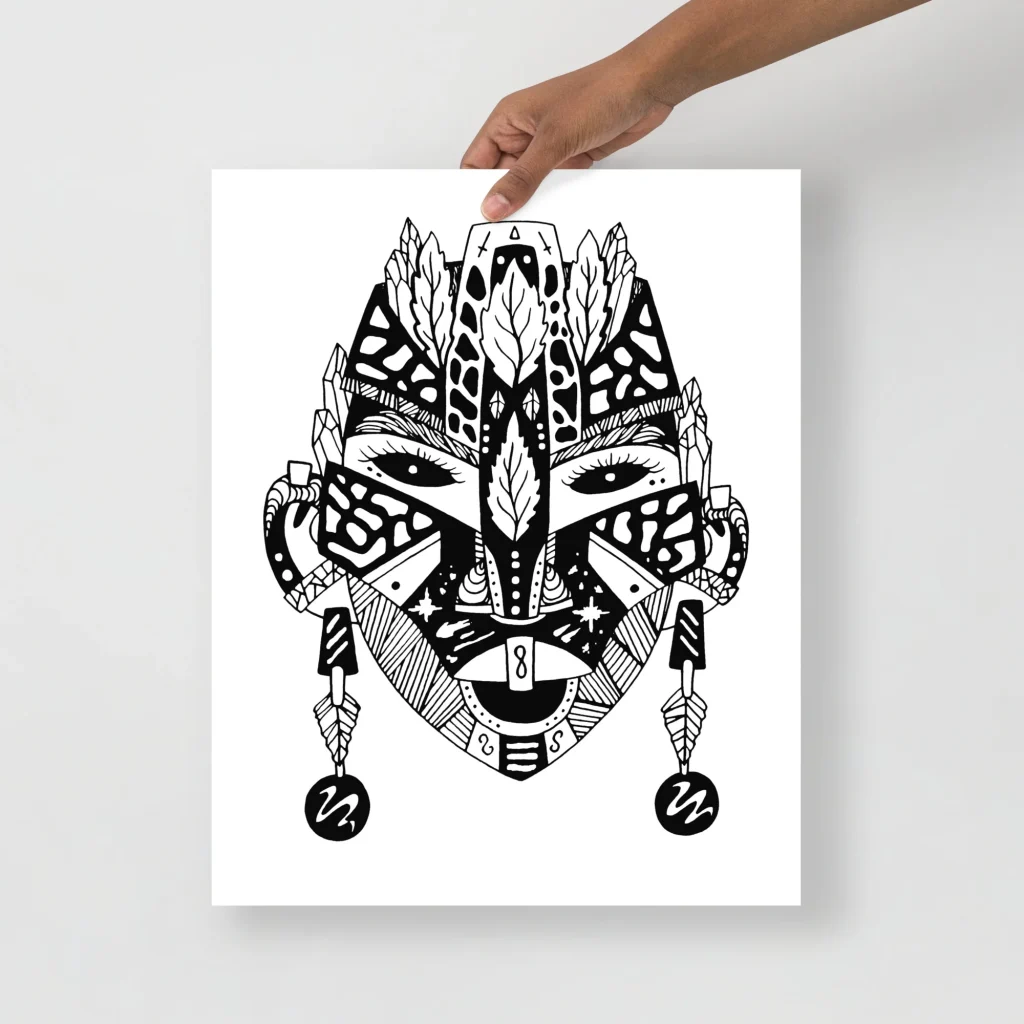
A few of the ways people live with these pieces
- A heartfelt housewarming or milestone gift
- As a bold anchor above a living room sofa or reading nook
- Grouped in threes or fours for a striking gallery wall
- A single statement mask in a home office or entryway
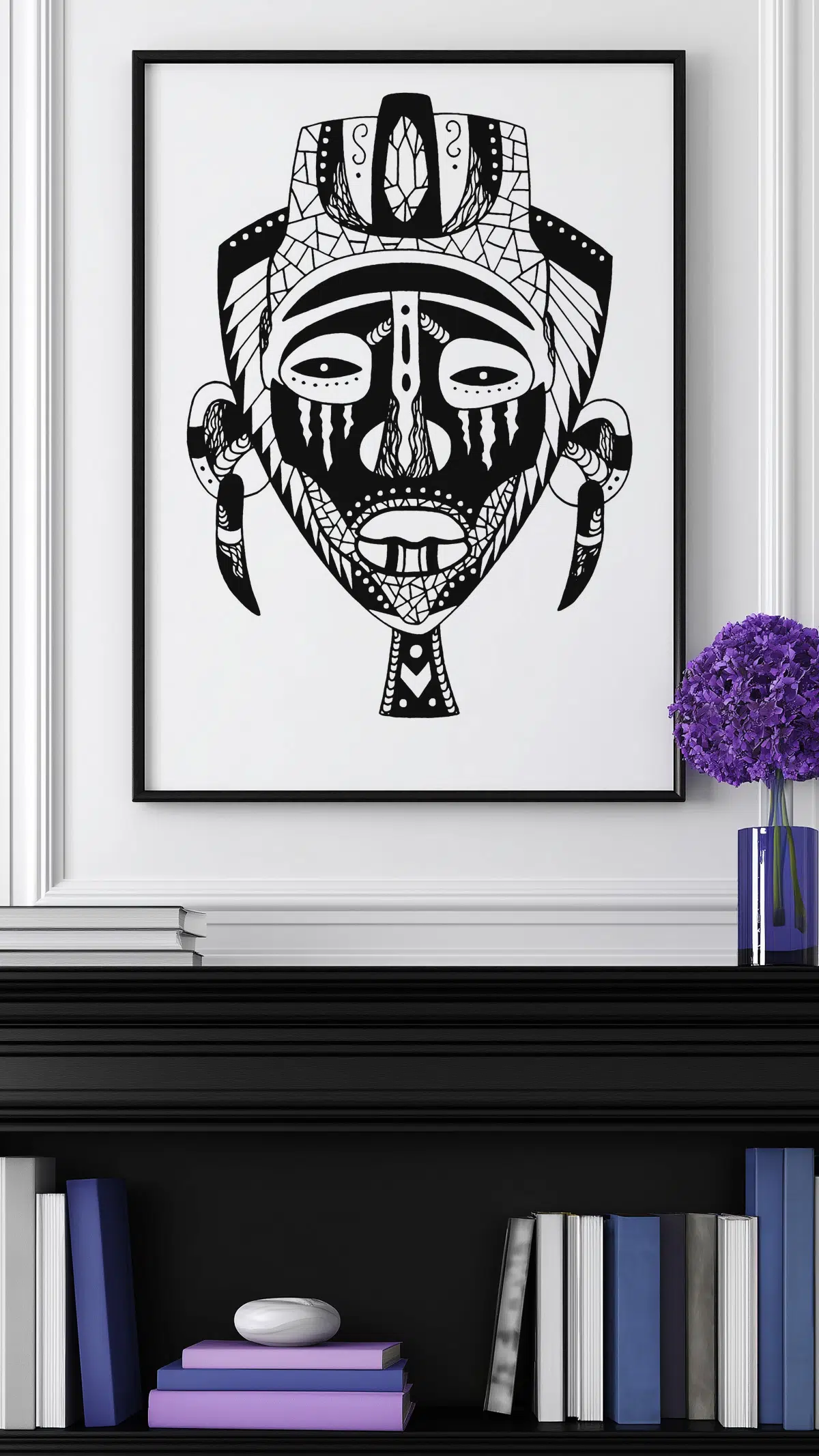
African Mask 98 of 100
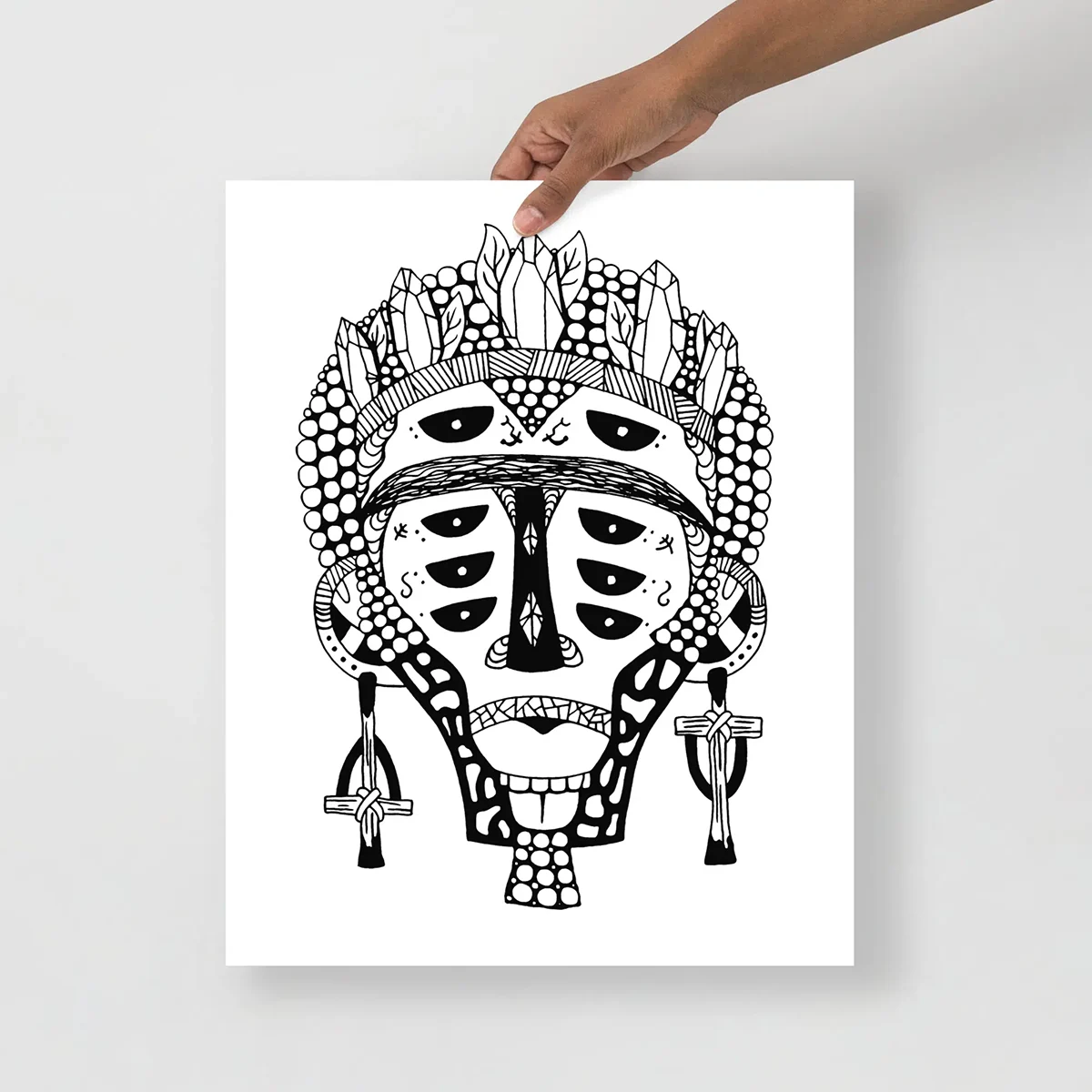
When you stand in front of one of these, you’re not only looking at a drawing. You’re looking through a doorway between worlds — the kind of bold line art masks that stand as a testament to humanity’s long dance with the divine.
Bring This Power Into Your Space
If this work resonates — if you feel that pull of ancestral wisdom meeting contemporary vision — I’d love for you to bring one of these pieces home. Each print from my 100 African Mask Drawings collection is far more than wall art. It carries presence, and it genuinely changes the feeling of a room.
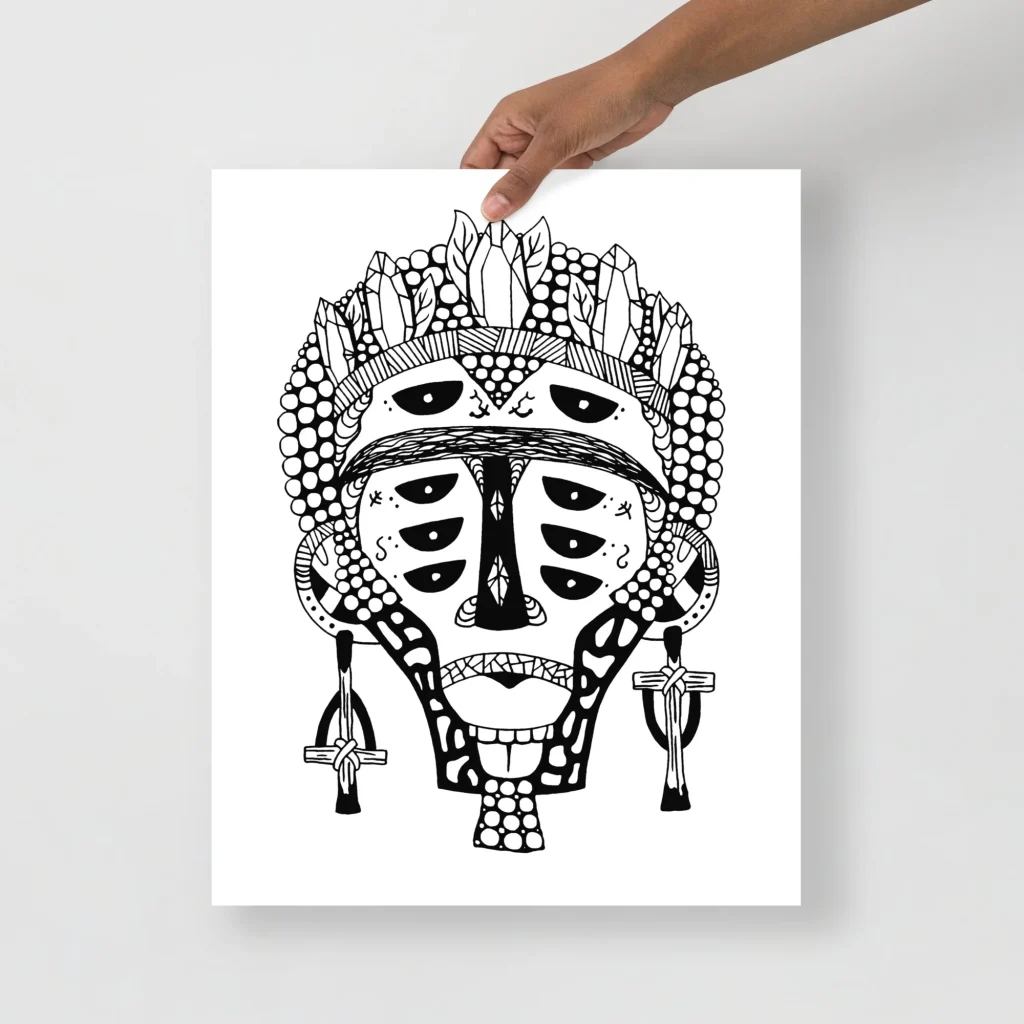
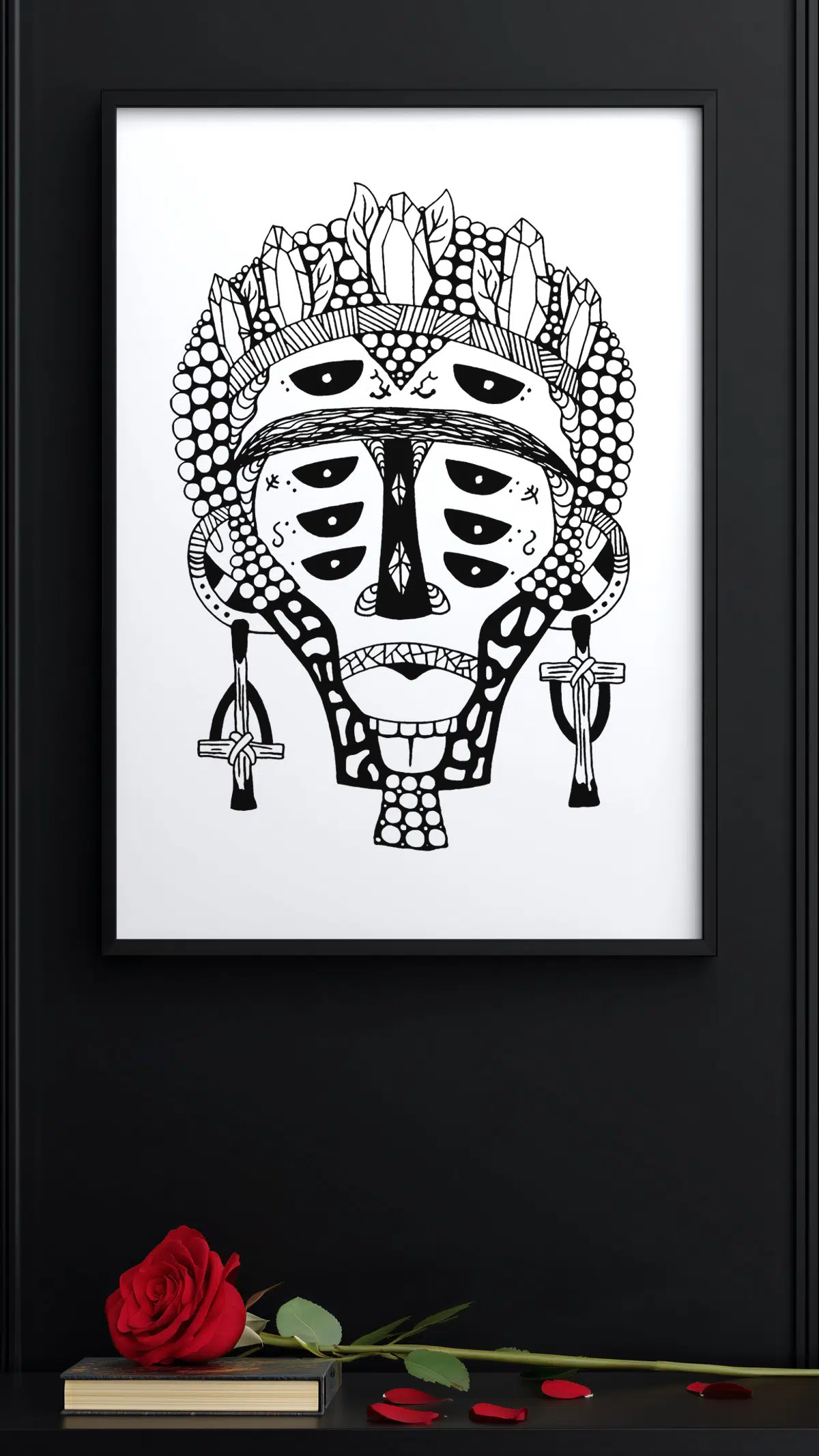
So when you choose a print, you’re not just decorating your space — you’re helping me keep exploring these powerful forms. Come visit my shop and find the African mask art print that speaks to your spirit. My hope is simple: that whatever wall it hangs on, it makes someone pause, breathe, and feel a little more connected to something ancient and alive.
African Mask Art: Frequently Asked Questions
What does African mask art represent?
African mask art represents identity, heritage, and the spiritual traditions of the cultures that created the original masks. In my work, each piece honors that meaning through bold geometry and layered patterns, carrying the presence of ceremony onto your wall rather than treating the mask as simple decoration.
Are these African mask prints hand-drawn or AI-generated?
Every piece is human-made, hand-drawn in pen and ink — never AI-generated. Each mask in the 100-mask series is drawn stroke by stroke, so the line weights, patterns, and small imperfections all come from my own hand. That authenticity is the whole point of the collection.
What sizes and formats is African mask wall art available in?
Each design is available as a premium giclée art print in several sizes, as well as canvas wall art for a bolder, framed-free look. Many of the masks also come as t-shirts, mugs, and stickers, so you can choose how you want to live with the art.
Does African mask art make a good gift?
It makes a meaningful gift for someone moving into a new home, reconnecting with their heritage, or drawn to art with real cultural weight. A single mask works as a striking statement piece, while three or four together build a gallery wall that anchors a whole room.
Where does African mask wall art look best in a home?
These pieces work beautifully above a living room sofa, in a home office or entryway, or grouped as a gallery wall. The bold black-and-earth-tone line work stands out against both light and dark walls, making it easy to place in almost any contemporary space.