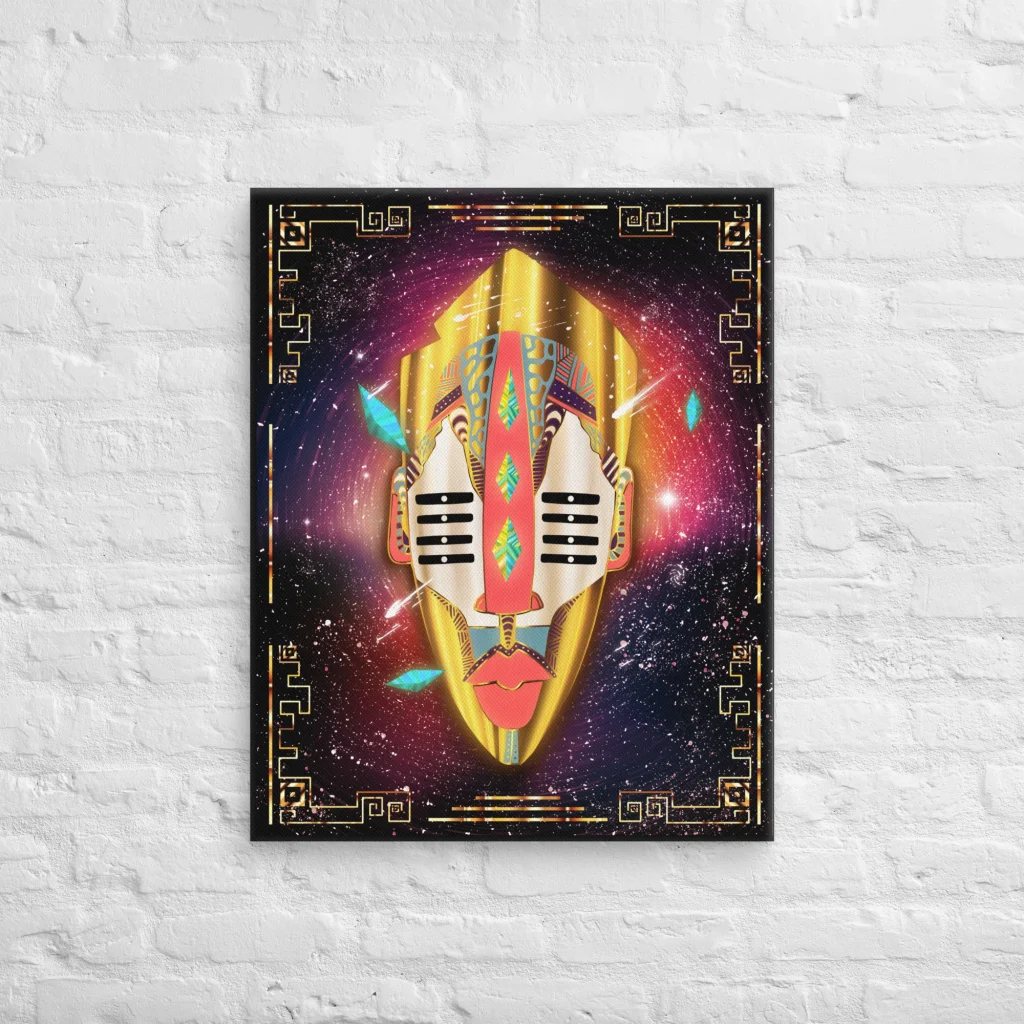
African Artworks That Carry the Weight of Centuries
I still remember the first night I sat down to draw a mask. It was late, the house was quiet, and I had a blank page and a single pen in front of me. I had been searching online for African artworks to study, and most of what I kept finding felt flat — pretty enough, but empty of the spirit I knew these traditions carried. That night I decided I would draw the kind of work I wished existed: bold, dense, alive. Everything in this series grew out of that one quiet decision.
I want to change the way these images are treated. My drawings of African masks are my contribution to the conversation — bold, hand-drawn pieces in stark black and white that belong on the walls of living rooms, offices, and any home where a person wants to be surrounded by something that actually means something.
What Makes These Pieces Different from Ordinary Decoration
African artworks were never made to simply fill empty space. In their original contexts, they served as ceremonial objects, as spiritual protection, as markers of social identity, and as channels of communication with ancestral forces. They were carried, worn, and danced. They mattered to the people who made them.
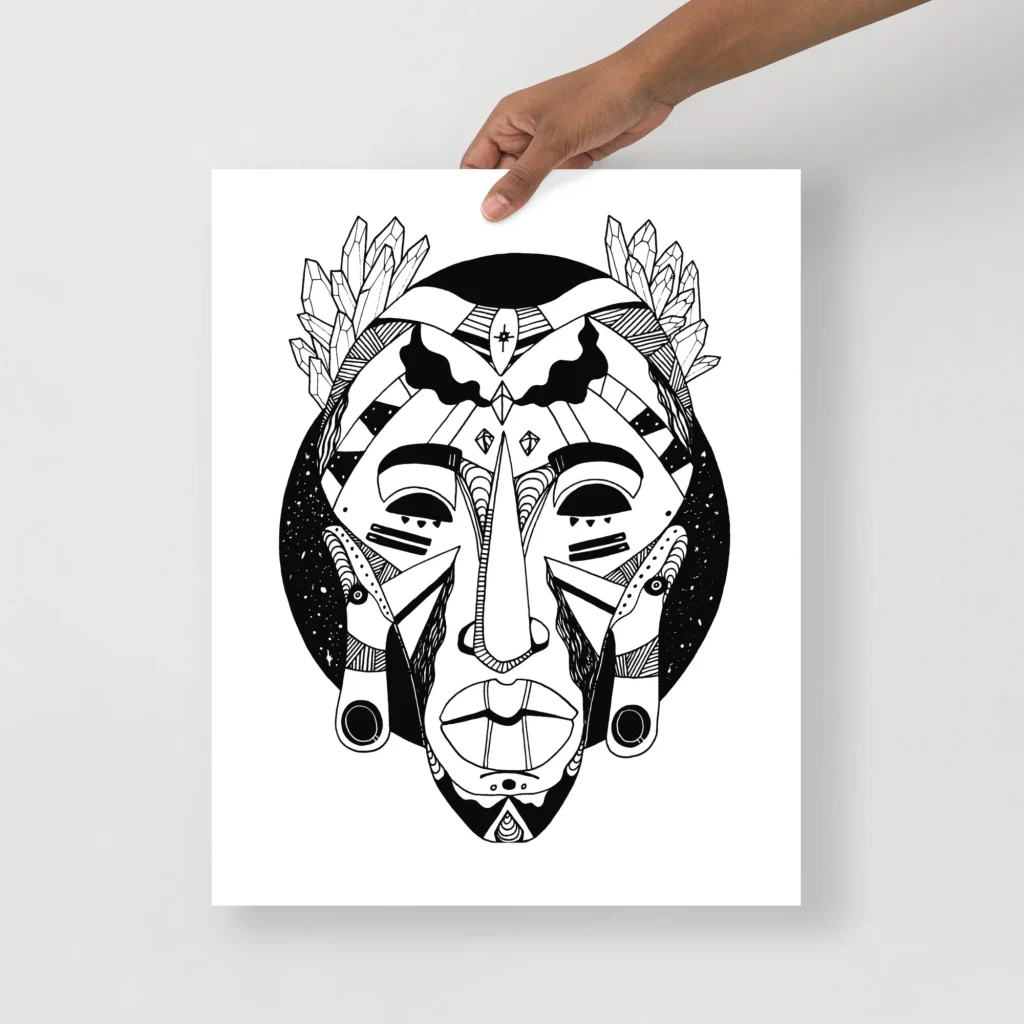
So when I create a pen and ink illustration rooted in those traditions, I am working with material that carries enormous weight. I take that seriously. Every stroke I place on the page is, in its own small way, an act of respect for the hands that came before mine.
My work centers on African mask design — the elongated faces, the dense geometric patterns that fill every plane of the surface, the crowns of crystals and feathers that lift each figure into a spiritual register. None of these are invented details. They draw from visual languages that have lived for generations, passed down through carving, weaving, and ceremony.
The Pen and Ink Process Behind the Work
For this series I work in pen and ink alone. Black and white. No color, no AI, no digital assistance of any kind. The image is built line by line, pattern by pattern, until the face finally emerges from the white page with the authority it deserves. There is no undo button when ink meets paper, and I have come to love that pressure.
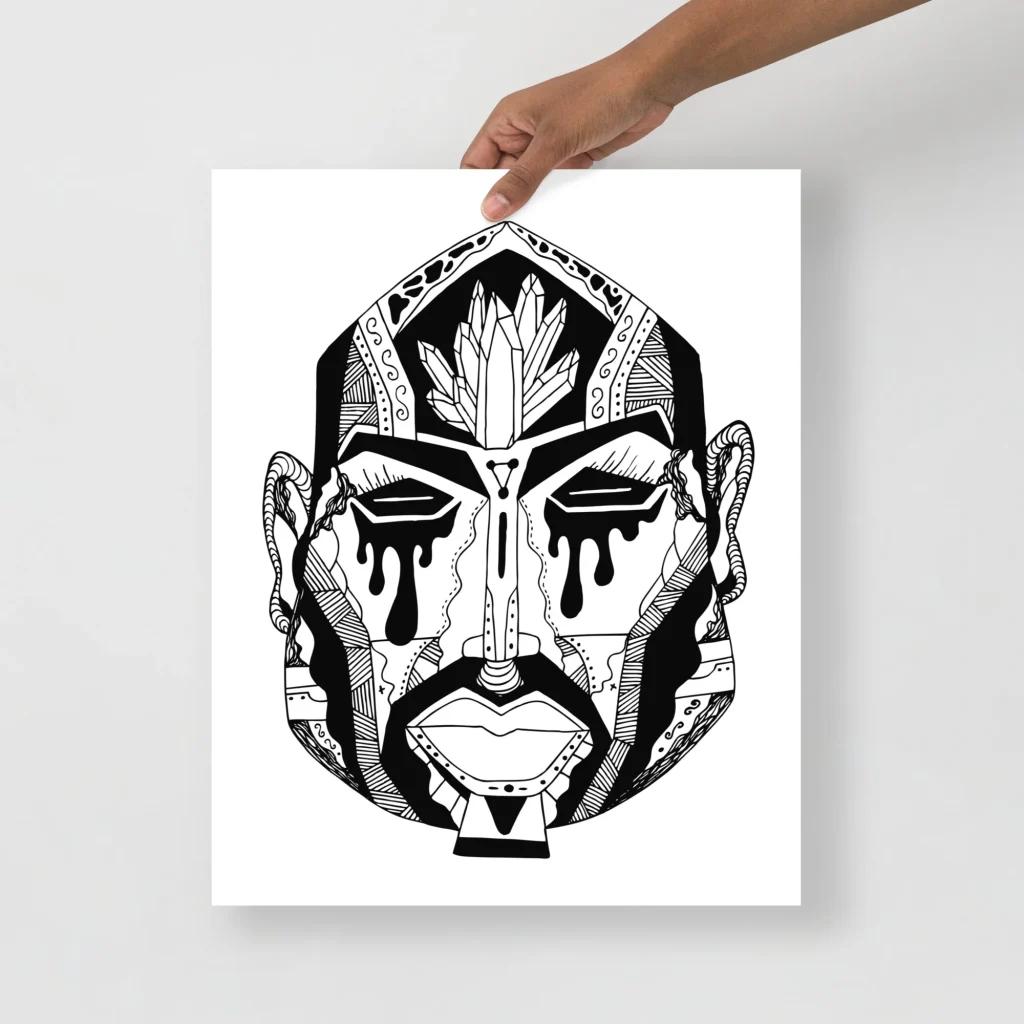
Something about the deliberate pace of pen work suits this subject deeply. The original makers built their pieces with extraordinary patience too — every carved line in an African tribal mask drawing was placed with intention, never by accident. I try to honor that same intentionality in my own process. Rushing is not an option. The work asks me to slow down and listen to what the image needs before the next mark goes down.
Why Black and White Captures the Essence
Choosing to work in black and white is not a limitation. For me it is a philosophical alignment with what these traditions have always been about: form, symbol, and energy rather than surface decoration.
The stark contrast of black ink against white paper creates something color would only dilute. The patterns filling the face read with absolute clarity. The geometry speaks without distraction. The power of the mask comes through in the line alone — and that, to me, is the whole point. When you strip everything back to pure mark-making, what remains is pure intention.
How These Pieces Live in a Contemporary Home
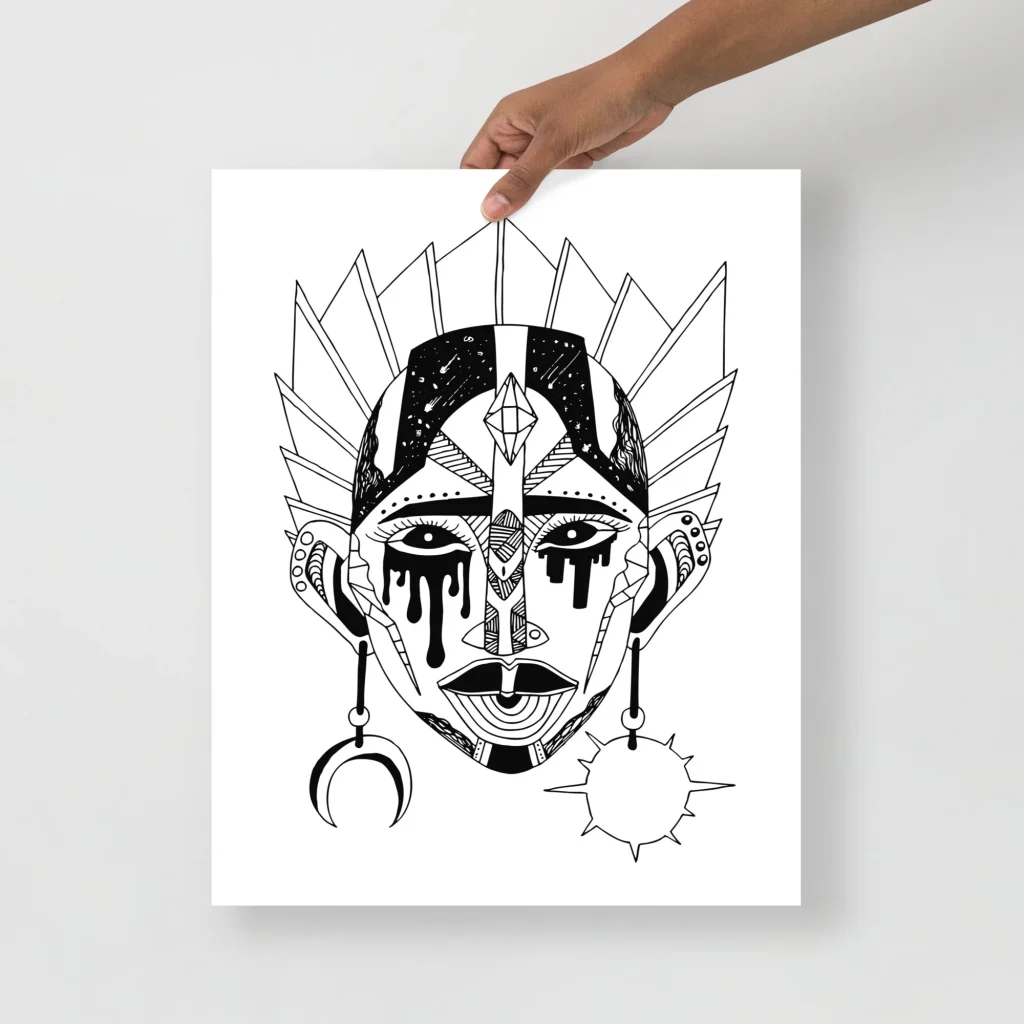
People sometimes wonder whether bold, ceremonial imagery will feel out of place on a modern wall. In my experience, the opposite is true. A bold pen and ink drawing commands attention in any room precisely because it communicates something mass-market decoration simply never can.
The geometric patterns create a visual rhythm that the eye keeps returning to. The headdress forms — crystals rising above the crown, feather elements fanning outward — build a vertical movement that draws your gaze upward and opens a sense of space around the figure. The black and white format works beautifully against almost any wall color or interior style, from clean minimalist white to a richly painted room with deep, saturated tones.
These African artworks are not niche pieces reserved for people who study art history. They are visually complex illustrations that make any wall more interesting — and they happen to carry centuries of cultural meaning in every line. That combination of aesthetic power and cultural depth is rare, and it is exactly what I reach for every time I put pen to paper.
Bring This Work Into Your Home
My drawings are available as fine art prints, canvas wall art, and on apparel. Every edition is limited — once a print run sells out, that piece is gone for good.
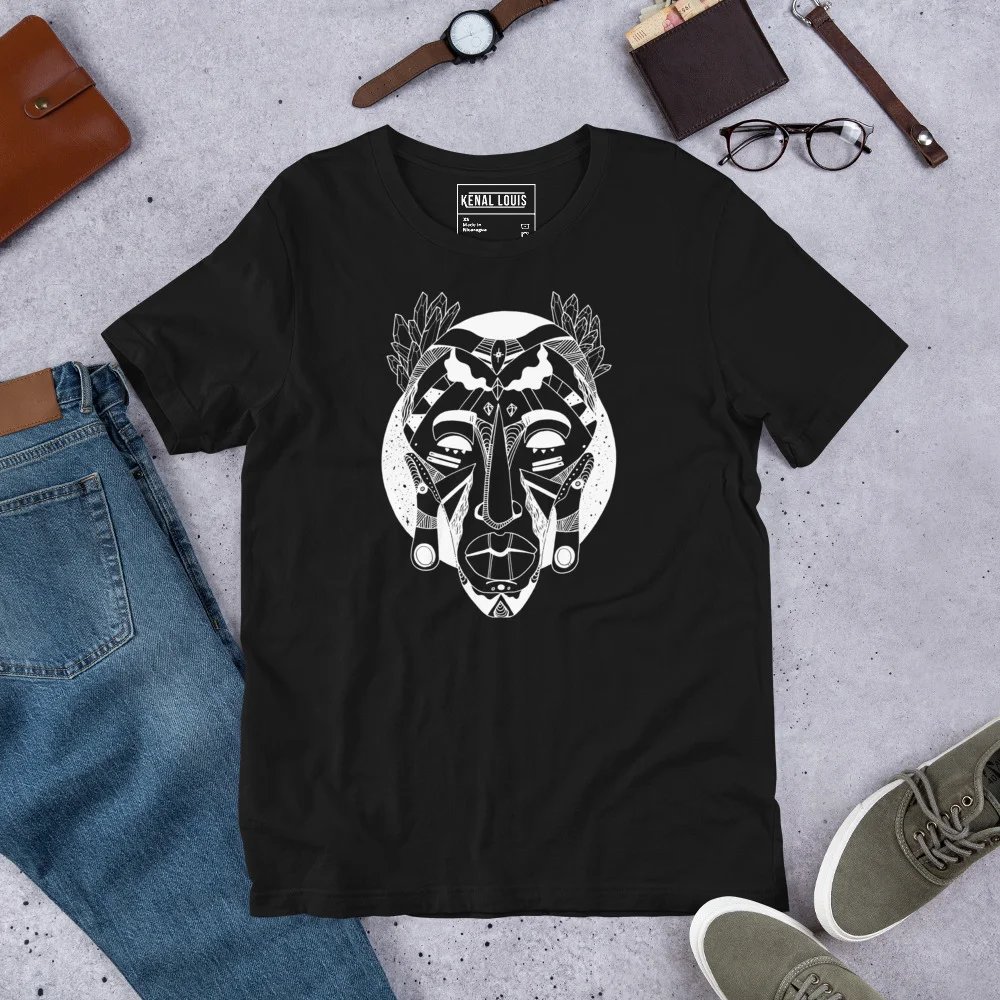
These are not mass-produced images. Every print comes from black and white African mask artwork that a real person made, by hand, in honor of real heritage. When you hang one of these pieces, you are not hanging a reproduction of a passing trend. You are hanging an original drawing that took hours of focused, deliberate work to complete.
Support the Artist, Support the Culture
When you bring one of these pieces home, you are supporting a Black artist who is dedicated to celebrating African culture and heritage through original, human-made illustration. No algorithms involved. No shortcuts. Just ink, paper, and intent.
And if you are choosing this for someone you love — a partner who lights up at bold design, a parent reconnecting with their roots, a friend furnishing a first home — these African artworks carry a quiet kind of meaning that lasts far longer than the moment they are unwrapped. Visit kenallouis.com/ and find the piece that belongs on your wall, or on the wall of someone you are thinking of. The prints are limited, so please do not wait until they are gone.