
A blank page once absorbed the heaviest feelings I had ever carried, and the color I poured into it pulled me back from an edge I am not sure I would have survived. Art saves lives in ways that words alone cannot reach — I know this because creation rescued me when expressing emotions through art became my only path out of the darkness threatening to consume me. This isn’t a comforting slogan to me. It is raw, lived truth.
My Personal Journey of Healing Through Creativity
For as long as I can remember, I have been making things. Drawing, painting, digital illustration, photography — my entire life has revolved around creativity since I was a child. The people who know me personally, and those who have followed my work for a while, understand that this is simply who I am. Ask anyone to describe me and words like “creative,” “imaginative,” or “a true artist” come up almost immediately.
But beneath the colorful surface of everything I make lies a quieter truth: art saves lives. It certainly saved mine.
The Hidden Struggles Behind the Canvas
Most people who have met me would never guess at the mental battles I have fought over the years. Behind the vibrant paintings and the detailed sketches were stretches of darkness that came close to swallowing me whole. Creating gave me an escape from realities I couldn’t otherwise face, a way to turn my imagination into a tool for self-empowerment rather than a place where my worst thoughts could echo unchecked.
Happiness comes and goes, but joy can be lasting. Having a steady source of expression — and carving out the time to actually use it — keeps me balanced. When my pencil touches paper or my brush meets canvas, something quietly magical happens. A bridge forms between my inner world and the world outside me, and for a moment the two stop fighting each other.
The Therapeutic Power of Creation
Making art is deeply therapeutic for me. When life becomes busy, scattered, or feels like it is spiraling into turmoil, I often find myself teetering on the edge of sadness and depression. In those moments, the simple act of creating something becomes a safe harbor in the storm — a place to ride it out instead of drowning in it.
Starting something new can lift my spirits in a way that almost nothing else manages to. Colors speak when words fail me. Shapes and lines carry emotions far too tangled for conversation. Expressing emotions through art has helped me process what I feel and slowly heal from it.
Learning to Bounce Back
Over time, I have learned to take the sadness and depression that occasionally find me and fight my way out of them as quickly as I can. That lesson came from one of my older brothers, who told me something I have never forgotten: “You can be down today, but don’t stay down too long.”
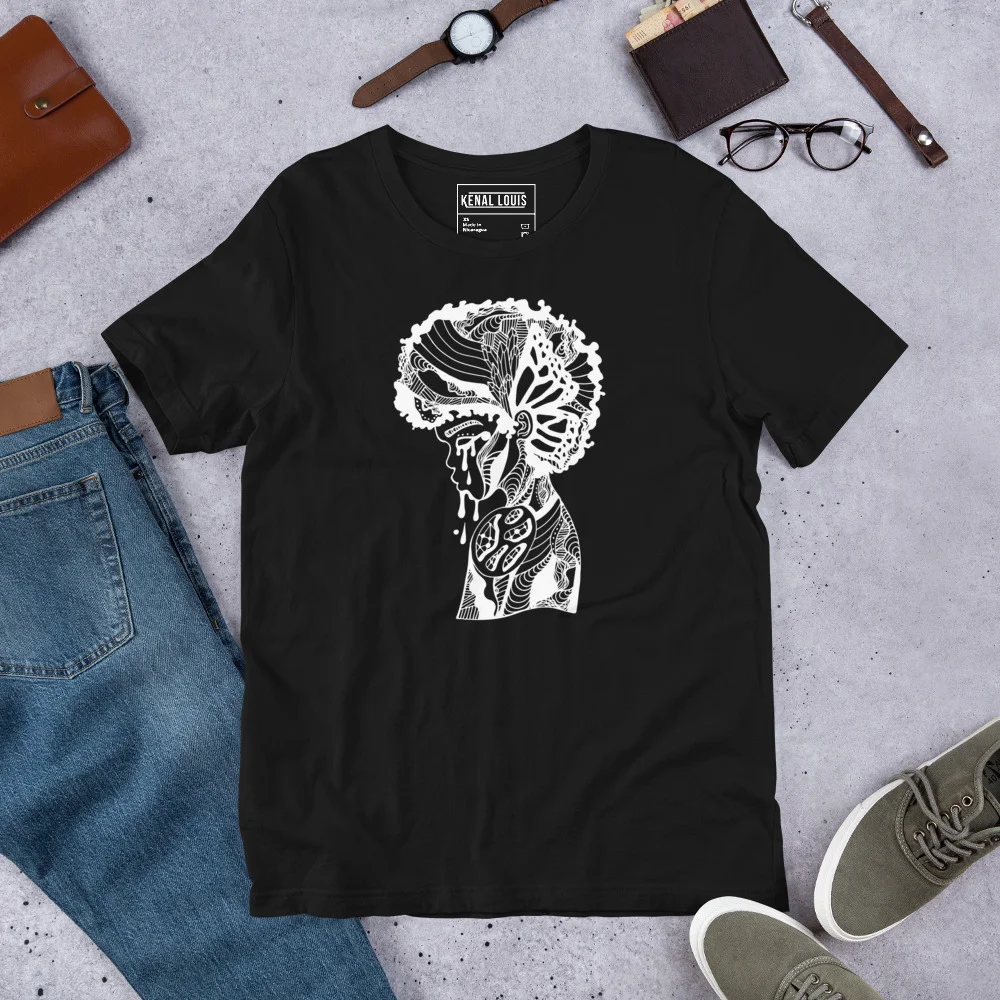
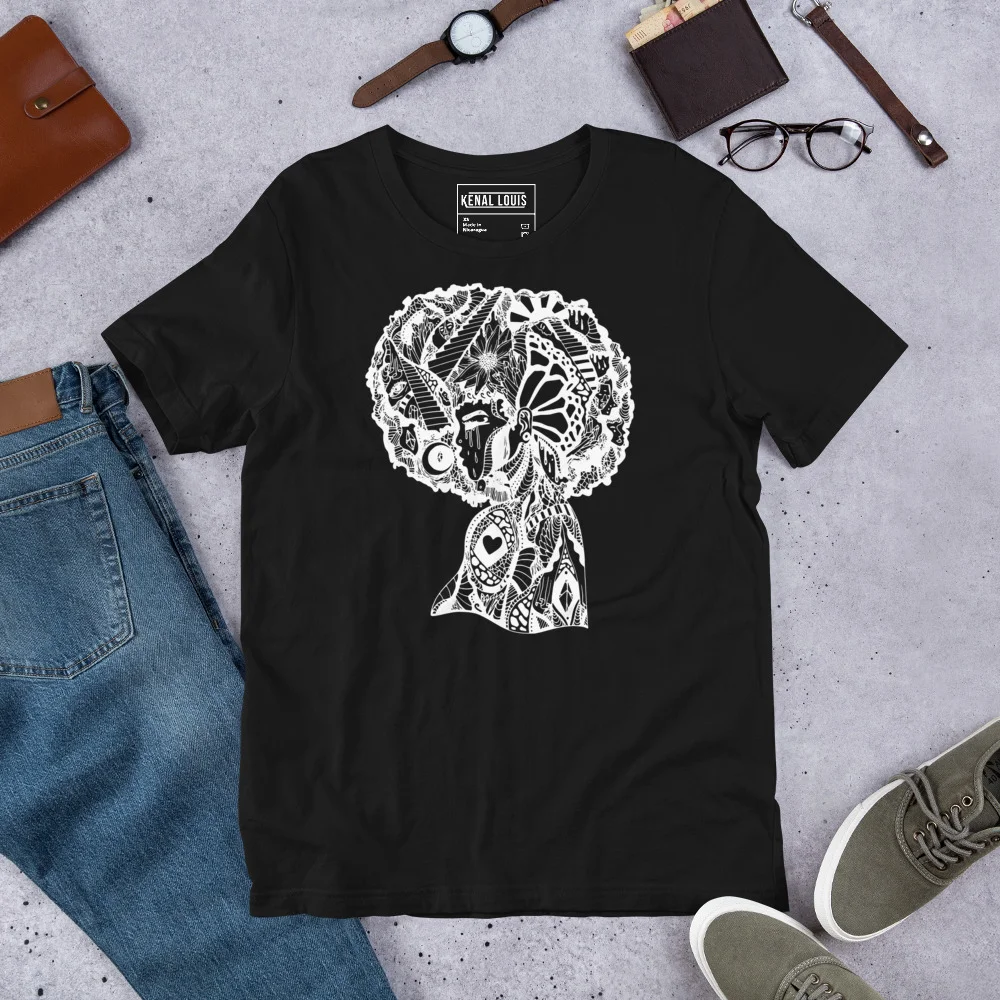
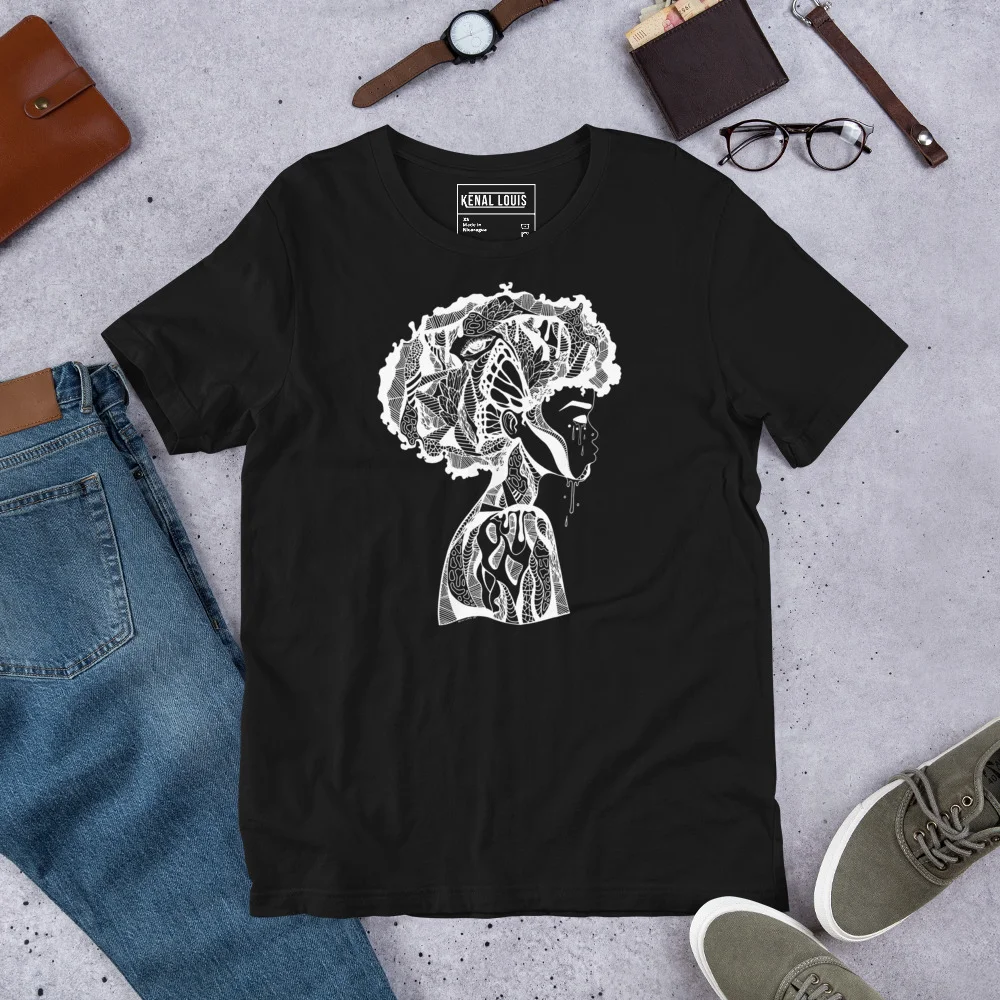
Afro Art Men's T-Shirt - Beauty in Struggle Line Art Tee
He stressed how important it is to bounce back quickly, because the longer you sit in a rut, the deeper it pulls at the rest of your life. That wisdom has been crucial for me, and art has been my most effective tool for the climb back up. His words live in my head every single time I feel the darkness creeping in — and picking up a pencil or a brush is almost always the first step I take toward the light.
How Art Saves Lives: What I Have Lived Through
I am certain that art saves lives because I have felt its healing power again and again. When words couldn’t reach my pain, drawing could. When the future looked bleak, building something beautiful reminded me of the wonder still left in the world. There is something almost miraculous about the way a blank page can take in your heaviest feelings, give them a shape you can actually look at, and let you survive the looking.
Here is what creativity has given me when I needed it most.
A Safe Space for Expression
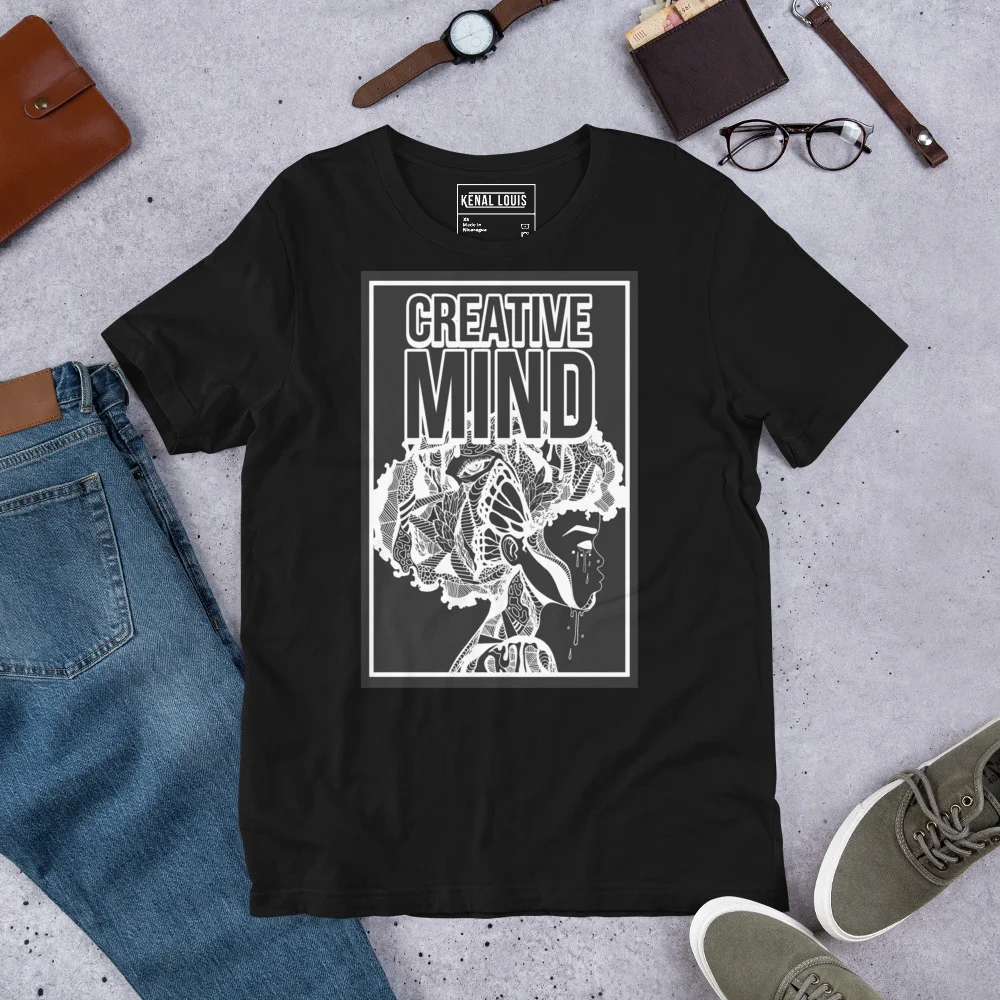
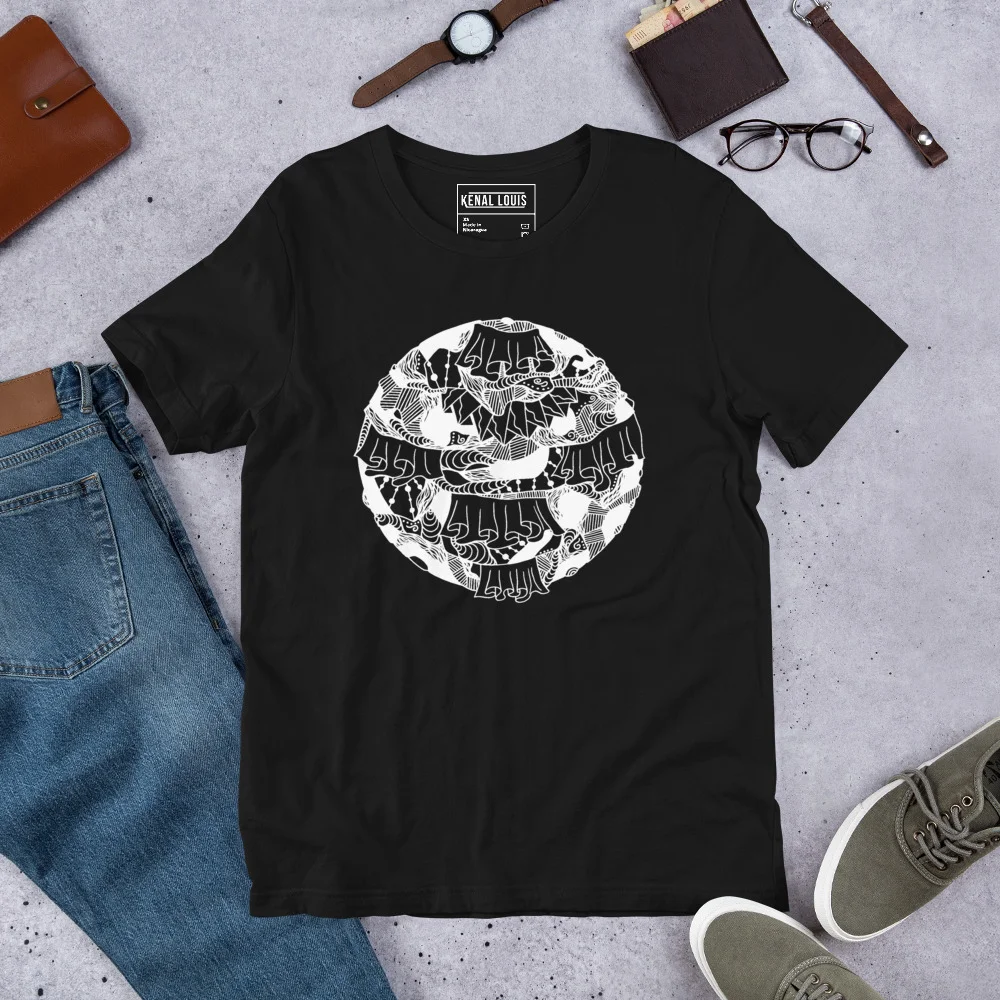
When emotions become overwhelming, art offers a container to hold them. Through visual expression, I can release feelings that would otherwise stay trapped inside and quietly do damage. That creative release has genuinely been life-saving during my darkest moments. My Creative Mind Line Art tee, for instance, grew straight out of that impulse — the need to take the interior landscape of the mind and put it onto something tangible, something you can wear and share with the world.
A Sense of Purpose and Identity
Even on the days when I questioned everything else, my identity as an artist stayed firmly in place. That creative purpose gave me something to grip when the rest of my life felt uncertain — an anchor I could return to. No matter how lost I felt, I always knew one thing for sure: I am someone who makes things. That knowledge alone has carried me through more than I can count.
Connection When Isolation Threatens
By sharing my work, I have found others who understand both the creative process and the emotional weight it can carry. Those connections remind me I am not alone, and that shared understanding has been vital to my wellbeing. Art is a conversation. Even when you create in complete silence, you are reaching toward someone who will one day see what you made and feel a little less alone because of it.
The Universal Healing Power of Art
I suspect a great many artists feel the same way about the role art plays in their survival. Throughout history, countless creators have turned to their craft in their darkest hours and somehow found light there. This healing crosses cultures, eras, and every kind of personal circumstance.
From Frida Kahlo processing her physical pain through self-portraits to veterans working through PTSD in art therapy, the evidence is everywhere: creating helps us endure our hardest experiences. The act of making something — anything at all — is a quiet way of insisting that you are still here, still present, still able to add something to the world.
You Don’t Need to Be “Talented” to Benefit
Even if you are not a world-class artist, have never been published, or don’t create nearly as often as I have over the years, it is never too late to begin. This kind of healing is not reserved for professionals or for the people society decides are “talented.” The canvas doesn’t care about your résumé. It only cares that you showed up.
Getting Started on Your Creative Journey
You can pick up a pen, a pencil, or a brush and make whatever you feel like making. It can be representational or completely abstract. It can be pure feeling, or it can be sparked by something you saw, a song you love, or an emotion you can’t name. The only real requirement is that you allow yourself to create without judgment. Give yourself permission to make something imperfect, something messy, something that only makes sense to you — because that is exactly where the healing lives.
A few simple ways to begin:
- Keep a sketchbook for doodles and visual thoughts
- Try finger painting to connect directly with color and texture
- Experiment with collage using magazines and found materials
- Take photographs that capture moments or feelings that move you
Remember, the goal isn’t to produce a masterpiece — it is to live inside the process. The healing happens in the doing, not in the finished piece. Every single mark you make is a small act of courage.
When Art Becomes a Lifeline
During my most challenging stretches, art has been far more than a hobby — it has been a lifeline. When words failed and ordinary coping mechanisms weren’t enough, creating powerful and emotional art pieces brought me back to myself.
This is why I speak so plainly about the truth that art saves lives. It rescued me more than once, and I have watched it do the same in other people’s journeys. I see it in the messages people send me after a piece connects with them — telling me a design spoke to something they could never quite put into words. That exchange is sacred to me.
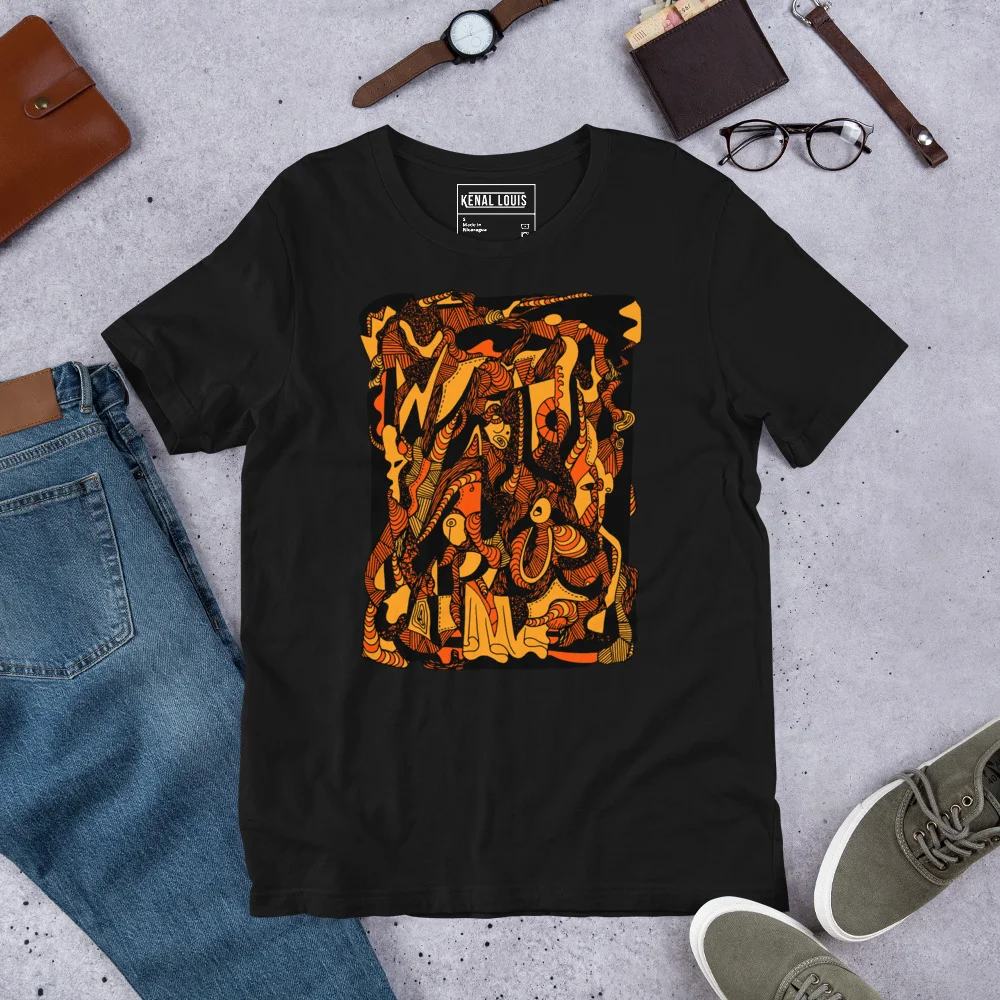
Orange and Black Abstract Art T-Shirt - Wave of Thoughts
Recognizing When You Need Creative Healing
How do you know when it is time to turn to art for emotional support? In my own experience, these signs tend to show up:
- Feeling disconnected from yourself and others
- Struggling to express or process complex emotions
- Experiencing ruminating thoughts that won’t quiet down
- Sensing a loss of identity or purpose
- Needing a safe way to release intense feelings
When these signs surface, making something can offer both immediate relief and long-term healing. You don’t have to wait until you feel better to start — more often than not, starting is the very thing that makes you feel better.
Creating a Sustainable Creative Practice
For creativity to keep doing its quiet rescue work, including in my own life, I have to make it sustainable. That doesn’t mean producing a masterpiece every day. It means weaving expression into my routine in ways that are manageable and realistic.
A few approaches that have genuinely worked for me:
Setting Realistic Creative Goals
Instead of pressuring myself to make elaborate work while I’m already struggling, I have learned that even five minutes of drawing can shift my whole mental state. Small, consistent acts of creation have a surprisingly powerful cumulative effect. A quick sketch of whatever is in front of me, a few lines of a figure, a single wash of color across a page — these tiny sessions add up to something real over time.
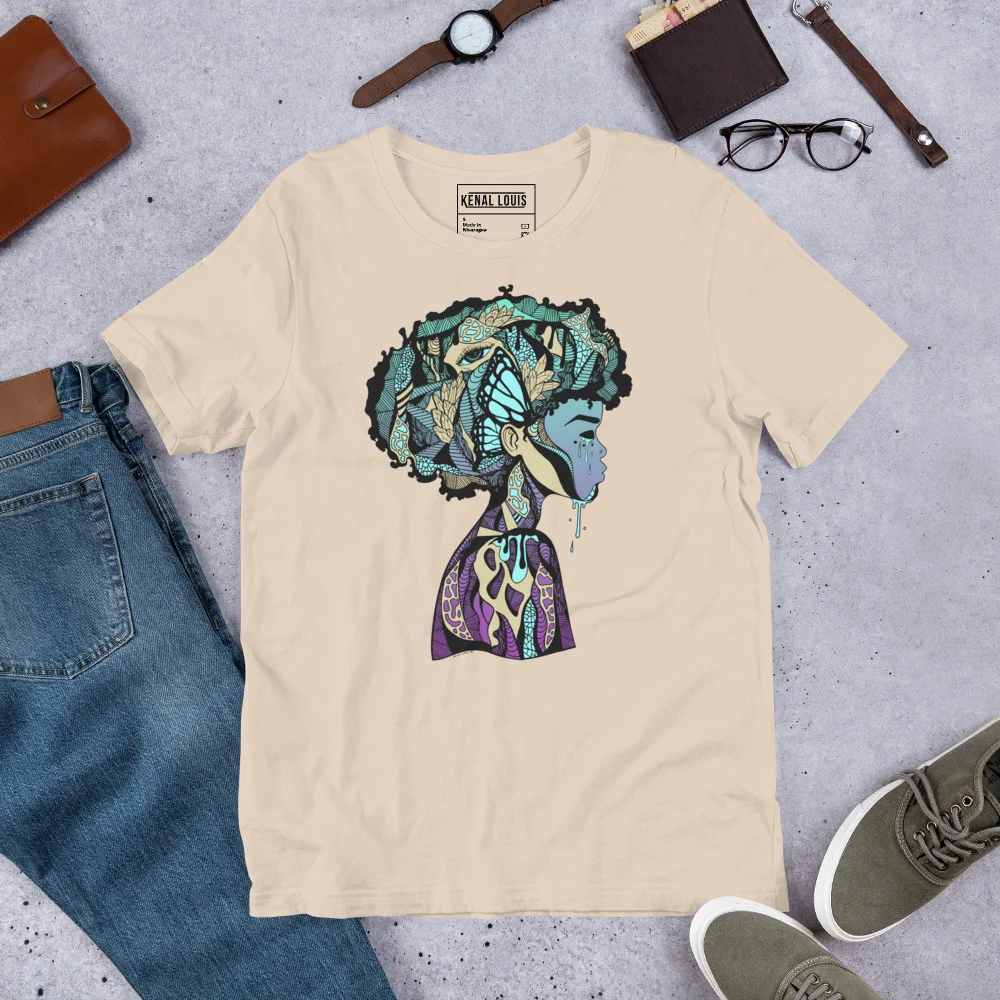
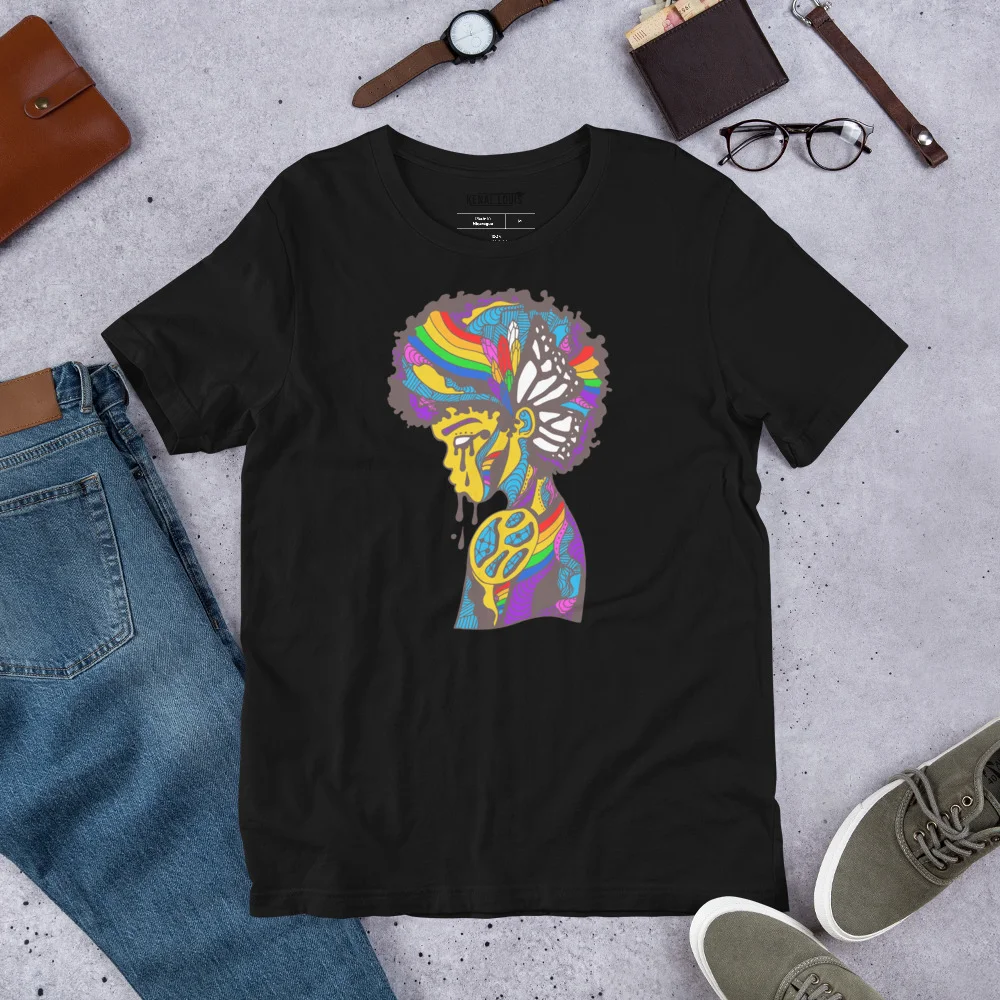
Beautiful Mind Afrocentric Art T-Shirt - Ocean Blue Purple Tee
Creating a Dedicated Space for Art
Having a dedicated area — even just a corner of a room — where my supplies stay within reach makes it far easier to turn to creating when I need it most. When the tools are right there, the barrier to starting almost disappears. I don’t have to hunt for a pencil when the urge strikes; I just sit down and begin.
Letting Go of Perfectionism
When art is keeping you afloat, the outcome matters far less than the act itself. I have learned to value honest, imperfect expression over polished results, especially in the hard seasons. Some of the most emotionally truthful work I have ever made would never hang in a gallery — and that is completely fine. It did its job the moment I made it.
Finding Community Through Art
Sharing my creative journey with people who understand it has amplified its healing power in my life. Online or in person, creative communities offer support when the road gets steep. Knowing that someone else is out there making things — struggling and creating and persisting — makes my own practice feel less like a solitary fight and more like a shared act of survival.
The Legacy of Suffering Artists: Van Gogh’s Shadow
Anyone with an art background has heard the stories about Vincent van Gogh and the depression that ravaged his brilliant mind. Growing up and studying art history, his was always one of the most tragic tales I came across.
You could call it the most famous tragic story of an artist’s life — the severed ear, the asylum stays, and ultimately, his heartbreaking end.
And yet his suffering produced art that completely changed how we understand creative expression. Those swirling stars and vibrant cypress trees came from the same mind that could never find peace in our world. There is something both devastating and awe-inspiring tangled up in that reality.
When I wrestle with my own darkness, I often think of van Gogh — not to romanticize his pain, because there was nothing beautiful about it, but to remind myself that the act of creation can be a lifeline even when it cannot fully save us.
Creativity has carried me through more times than I can count, and I still hold the complicated truth that sometimes it helps us endure without completely healing our wounds.
Unlike van Gogh, I have been fortunate enough to find sustainable ways to use my work as therapy rather than as a lone outlet for unresolved anguish. I learned to pair the act of creating with the act of reaching out — to friends, to community, to professional support when I need it. Art is a powerful tool, but it does its best work alongside other forms of care.
His story reminds me to look for help beyond my sketchbook when I have to, to build community around my practice, and to honor the process of creation even on the days when the results disappoint me.
In honoring van Gogh’s memory, I choose to see more than the suffering-artist archetype. I see a reminder of why accessible mental health support has to walk beside our creative journeys. The brush can carry a great deal — but it should never have to carry everything alone.
Art as Ongoing Salvation
This kind of rescue isn’t a one-time event — it happens continuously. My relationship with creative expression has shifted across the seasons of my life, offering different kinds of healing at different stages. What never changes is its power to reconnect me to myself, to help me process the hard emotions, and to find meaning even in the middle of suffering.
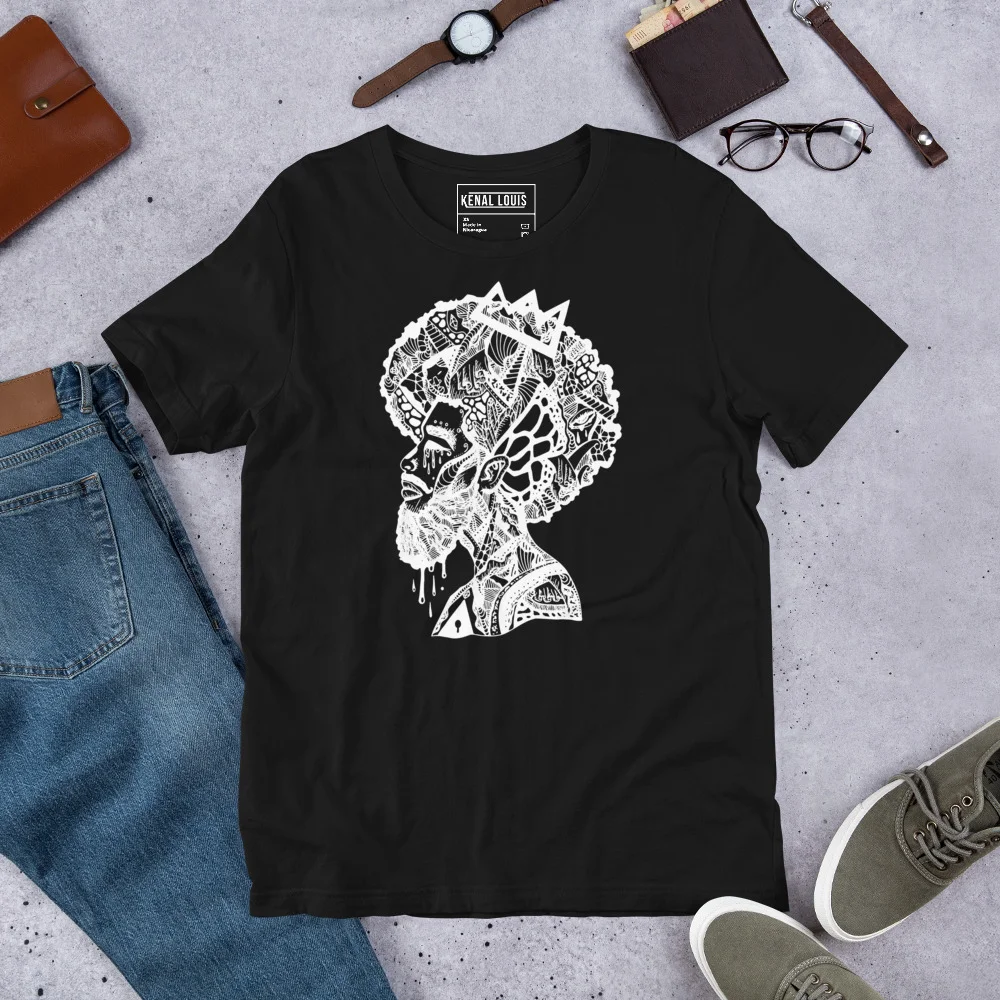
Every piece I make carries a fragment of that journey. The line art tracing the contours of a face, the bold colors pressing against a dark background, the abstract waves that mirror the chaos and calm inside my own mind — all of it is proof that I kept going. That I chose to make something instead of disappearing into the dark.
If you are an artist, how has creating saved your life? Leave a comment below. And if you have questions about getting started, I would genuinely love to help you take that first step. It is never too late to let creativity become your lifeline.
Art saves lives. It saved mine. And maybe, if you open yourself to what it can do, it will save yours too.
Have you experienced the healing power of creativity? Share your story in the comments below.