
African Drawings That Hold More Than the Eye Can See
I’ll confess something about my process: I never sit down to start one of these pieces feeling certain. There is always a moment of doubt, a quiet question about whether my hand can honor what the subject deserves. African drawings have always been about more than what is visible on the surface, and that weight stays with me from the first mark to the last.
The visual traditions of the African continent — from the carved masks of West Africa, to the geometric patterns of the Ndebele people, to the rock art of the San — carry layers of meaning that reward the viewer who slows down and pays attention. That is the spirit I try to bring into every piece when I draw african mask art with pen and ink.
These are not illustrations of exotic objects to me. They are acts of cultural respect rendered in black and white line work, made one careful stroke at a time.
What My African Drawings Look Like
My work centers on the mask form — the elongated face, the geometric surface patterns, the ceremonial headdresses adorned with crystals and feathers. Each piece is drawn entirely by hand in pen and ink. No color. No AI generation. No digital shortcuts of any kind. Just my hand, the paper, and however many hours it takes.
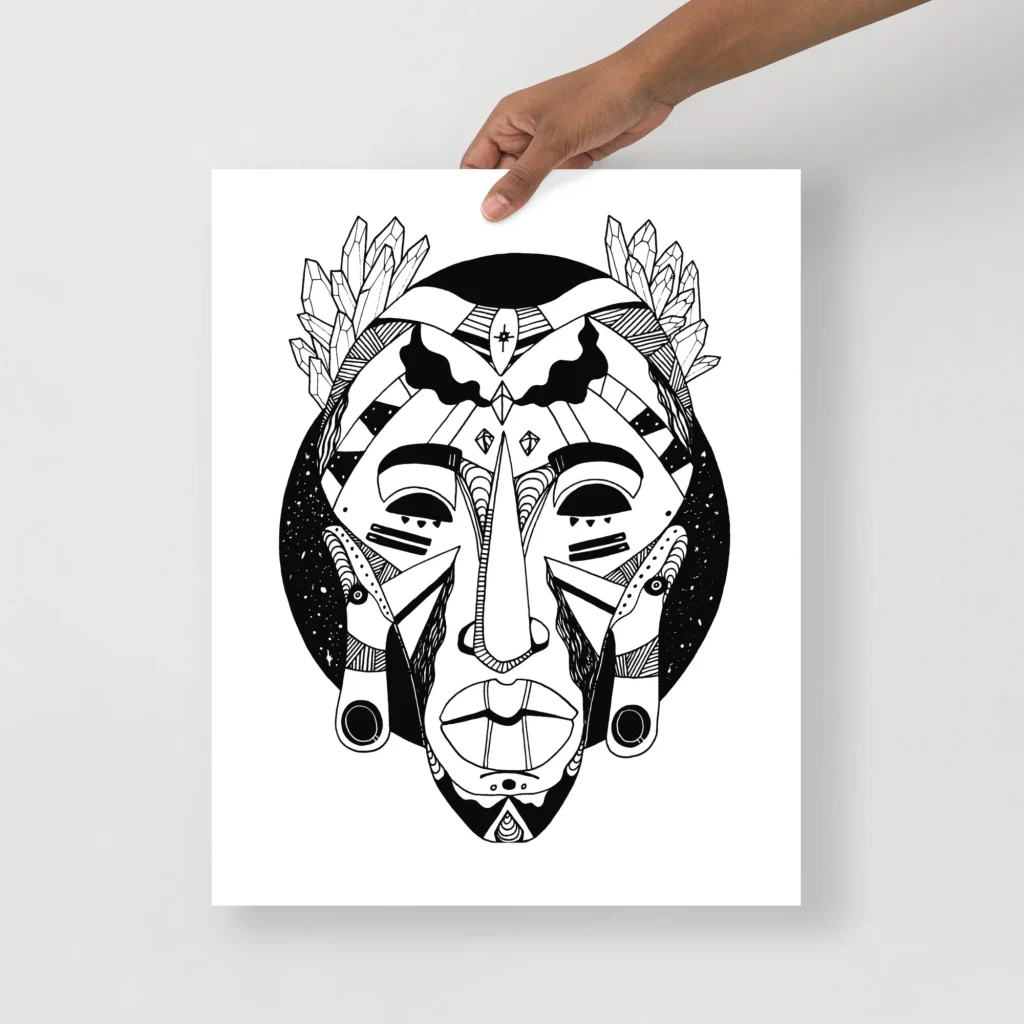
The process is slow and deliberate. I build each face from its basic structure outward, filling every surface with dense, carefully placed line work that gives the mask its sense of depth and texture. A single piece can take many hours, sometimes days, between the first mark and the finished drawing.
But the time is the point. In their traditional contexts, these forms were also made with extraordinary patience and precision. I try to honor that same relationship between maker and material — the belief that the care you pour into something is inseparable from the meaning it ends up carrying.
The Range of Imagery in These Drawings
My collection includes several distinct mask types. Some feature tall, vertical faces with crystal crowns set against a circular, starry backdrop — placing the mask in a cosmic space rather than an earthly one. Others are broader and more architectural in their geometry, with wide oval eye sockets, bold triangular nose forms, and intricate patterning that fills every inch of the composition. A few incorporate sun and moon symbols, dripping eyes, and third-eye crystals — imagery that draws on spiritual traditions across multiple African and African-diaspora cultures.
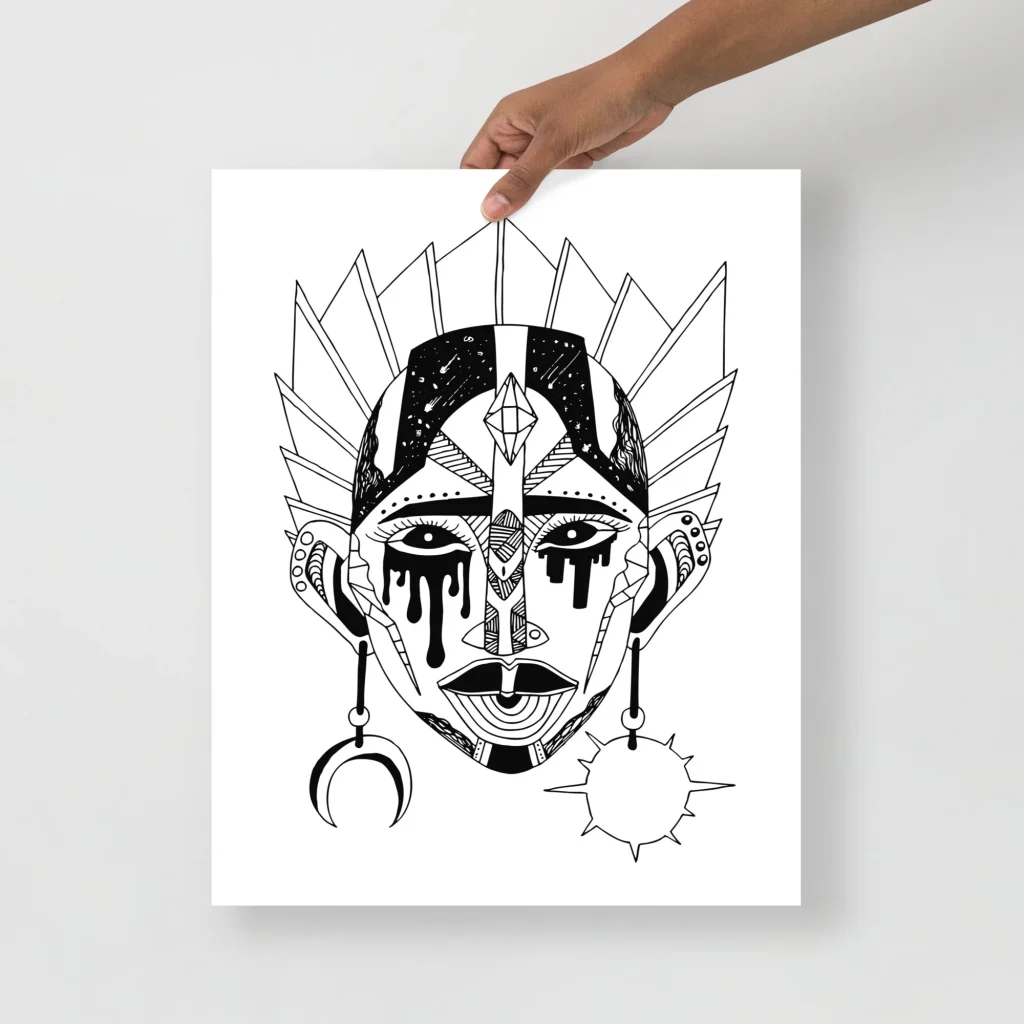
Each drawing is its own world. Each speaks a slightly different visual language within the broader tradition I am working in. What they all share is a commitment to the mask as a living symbol — not a relic behind glass, but a presence that looks back at you.
Why Black and White Works for This Subject
I chose African art in black and white on purpose, because it aligns with the essence of what these traditions have always done. They communicate through form and symbol, not through color. The geometry carries the meaning. The line carries the power. Stripping away color forces both the artist and the viewer to engage directly with structure — with the relationships between shapes, the weight of a single line, the tension between filled and empty space.
In black and white, my black and white African wall art feels connected to the original visual logic of the cultures it references. There is nothing merely decorative about the choice. It is a deliberate decision to let the drawing speak for itself.
Why These Pieces Work in Contemporary Spaces
One of the questions I hear most often is whether bold ceremonial imagery belongs in a modern home. My answer is an emphatic yes — and honestly, these pieces often become the most talked-about thing in any room they enter.
The reason is that this kind of work carries a visual density and cultural weight that most contemporary wall art simply does not. When someone walks into a room and sees a bold black and white mask print on the wall — the elaborate headdress, the dense geometric patterns, the deep circular backdrop — it sparks immediate engagement, both visual and intellectual. People want to know what they are looking at. They want to understand what it means. They want to know who made it, and why.
That curiosity is one of the most valuable things a piece of art can create. African drawings made with genuine craft and cultural respect consistently produce that response in the people who encounter them. They do not fade into the background. They hold their ground and invite conversation.
Own a Piece That Was Truly Made by Hand
My work is available as fine art prints, canvas wall art, t-shirts, sweatshirts, and mugs. All editions are limited. If a piece speaks to you, act on it — these do not stay available indefinitely. They also make a meaningful gift when you want to give something with real intention: a housewarming present for someone building a home that reflects who they are, a gift for a best friend who has always loved bold and culturally rooted decor, or a marker for a milestone that deserves more than something forgettable.
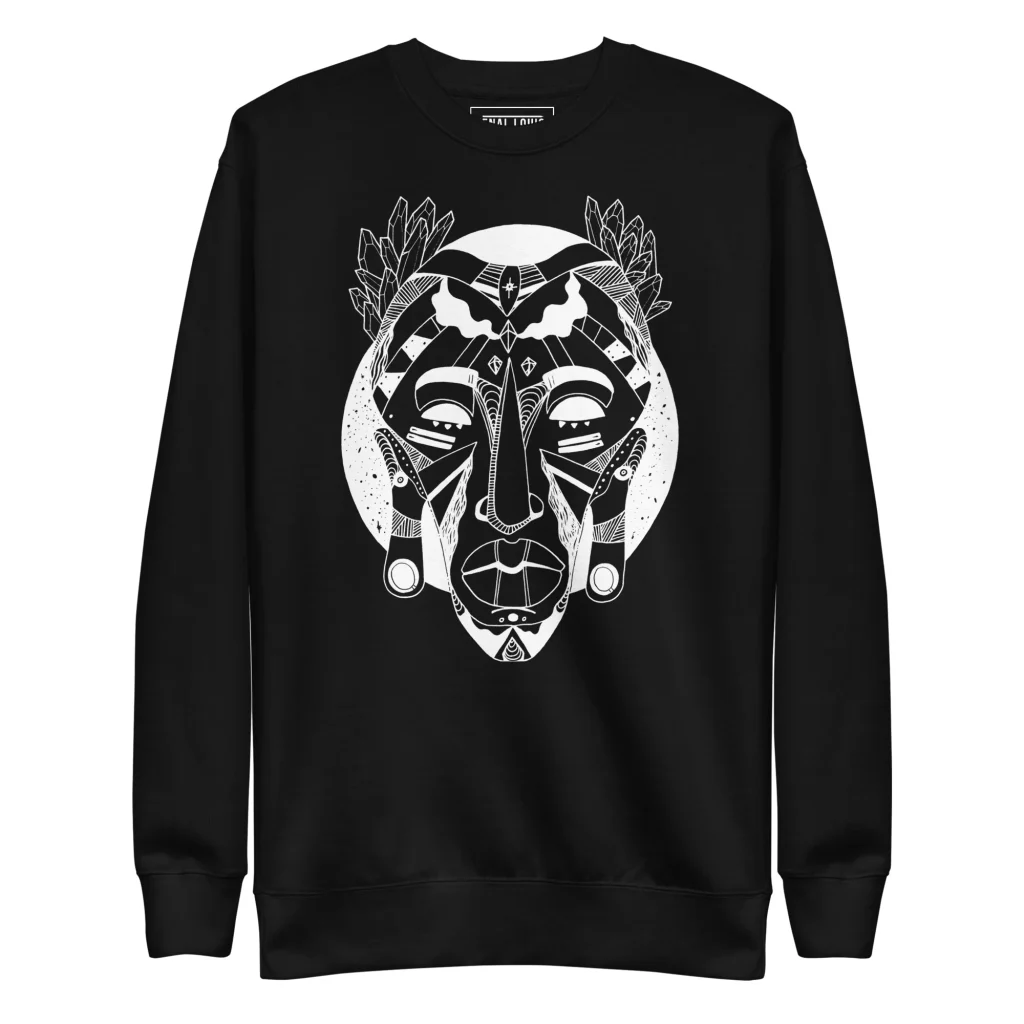
African Mask Sweatshirt - White Line Art Afrocentric Pullover
Every print comes from an original hand-drawn pen and ink illustration. This is real art made by a real person — not AI-generated content dressed up to look like it means something. When you bring one of these pieces into your home, you are bringing in something that took genuine time, skill, and cultural intention to create.
Support African Heritage Through Art
Investing in one of these pieces is exactly what Black art collectors who care about cultural representation choose to do — and for me, it means support for my dedication to making African culture visible on the walls where it has always belonged.
Visit kenallouis.com/ and explore the full collection at your own pace.
When I finish one of these drawings, I think about how long these images have already traveled — through generations, across continents, surviving everything history threw at them. To add my own hand to that long line, even in a small way, feels like the truest kind of hope I know: the belief that beauty made with care outlasts the person who made it.