
“Every artist dips his brush in his own soul, and paints his own nature into his pictures.” – Henry Ward Beecher
And maybe that is exactly why I keep returning to cats. Sit with one long enough and you stop seeing a generic animal — you start seeing a whole little person with moods, opinions, and a way of carrying herself that belongs to her alone. That is the spirit I chase every time I pick up my pen.
Revealing Character Through Lines
Each cat possesses a distinct personality, and doodle art unveils these unique spirits. My pen work focuses on capturing individual character rather than settling for generic cat shapes. There is something deeply satisfying about putting pen to paper and chasing the specific energy of a particular cat — the way one holds herself with regal stillness while another sprawls across the floor with shameless abandon, daring you to comment.
Personality Markers in Doodles
Character shows through subtle details, and I find that the smallest choices in a drawing carry the most weight. That is why I pay such close attention to:
- Eye shapes that hint at temperament — wide and curious, half-lidded and aloof, or sharp and mischievous
- Tail positions that signal mood — coiled tight with alertness, draped lazily over an armrest, or curled inward in quiet contentment
- Whisker angles that express attitude — fanned forward with interest or swept back with cool, unbothered indifference
These drawings go far beyond surface appearance. When I get those details right, the whole piece comes alive in front of me. And honestly, that is the moment doodle art becomes true portraiture — when personality shines through in every single line.
Beyond Physical Features
Personality lives in energy, not just form. A cat’s essence is something you feel before you fully see it, and I believe a few quick lines are uniquely suited to suggesting that quality. Nervous energy translates into quick, jagged strokes that seem to vibrate on the page. Lazy contentment calls for long, unhurried curves that settle into themselves. Playful mischief demands a certain lightness of touch — lines that dart and double back when you least expect them. In fact, my best ideas almost always emerge from sitting with a cat long enough to absorb their energy before I ever uncap the pen.
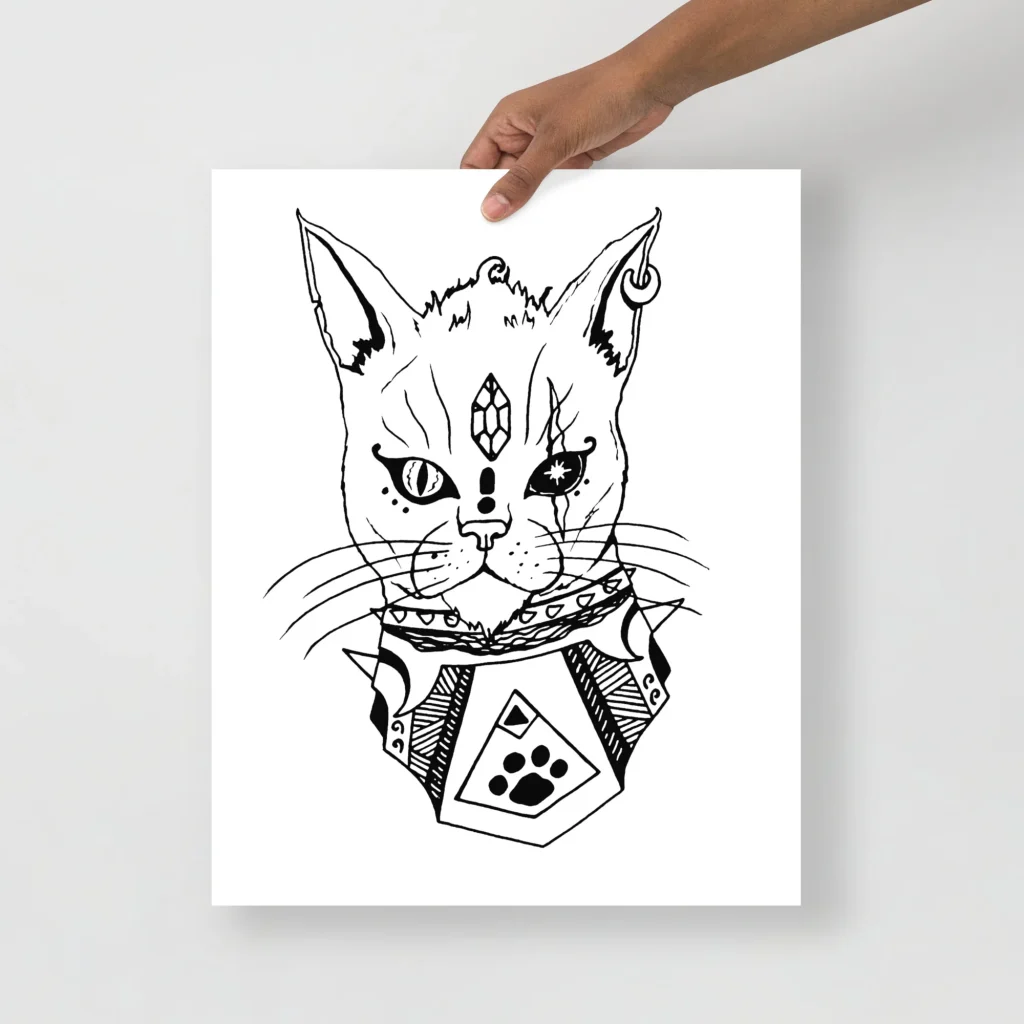
This kind of work has a special power to capture invisible qualities — the warmth behind a stare, the quiet authority in a posture, the gentle humor of a particular tilt of the head. These are the things that doodle art reveals where photos often fall short — true character, the irreducible something that makes one cat unlike any other.
Character-Building Techniques
When I work, I am thinking about personality at every stage of the drawing. The marks I make are deliberate choices that reflect who the cat actually is:
- Line quality matched to temperament — bold, confident strokes for a dominant cat, delicate and tentative marks for a shy one
- Spacing that reflects energy levels — tight, dense linework for a high-strung cat, open and airy composition for one who is perfectly relaxed
- Mark-making that echoes behavior — short, repetitive strokes for a fastidious groomer, loose gestural sweeps for a cat who moves like water
Finding Each Cat’s Essence
Creating pieces that truly resonate requires empathetic observation above all else. The drawings I am proudest of come from understanding individual cats deeply — watching how they move, how they rest, how they regard the world from a windowsill. A genuine personality portrait demands a real emotional connection, not just technical skill. I have to genuinely care about the subject to get it right, and I think that care is something you can feel.
My pen and ink work is always searching for each cat’s core self — that irreplaceable quality that would be missing if they were gone. Furthermore, the best doodle art comes from discovering exactly what makes each cat unique, and I hope that discovery comes through in every piece I make.
Celebrating Individuality
Every cat deserves to be recognized for their uniqueness. Generic art misses this completely — it gives you a cat, but never your cat. Personality-focused drawings, on the other hand, honor individual spirits and make the viewer feel genuinely seen, as though the artist truly understood the subject. That is the standard I hold myself to with every line.
People recognize these traits instantly when a drawing is working. There is that moment of delighted recognition — “that’s exactly how she looks when she’s plotting something” — that no amount of technical polish can manufacture on its own. It is also why so many viewers go on to commission cat drawing pieces of their own companions, wanting that one specific character they connect with most deeply preserved on paper.
This is also why a portrait like this makes such a heartfelt gesture for someone you love — a cat parent who has lost a beloved friend, a new pet owner celebrating their first furry roommate, or a mom whose cat practically runs the household. Given on a birthday, a holiday, or simply for no reason at all, art that truly sees a pet says something words rarely manage to. It captures the essence that makes that cat irreplaceable — not just a pretty image, but a genuine portrait of who they are.
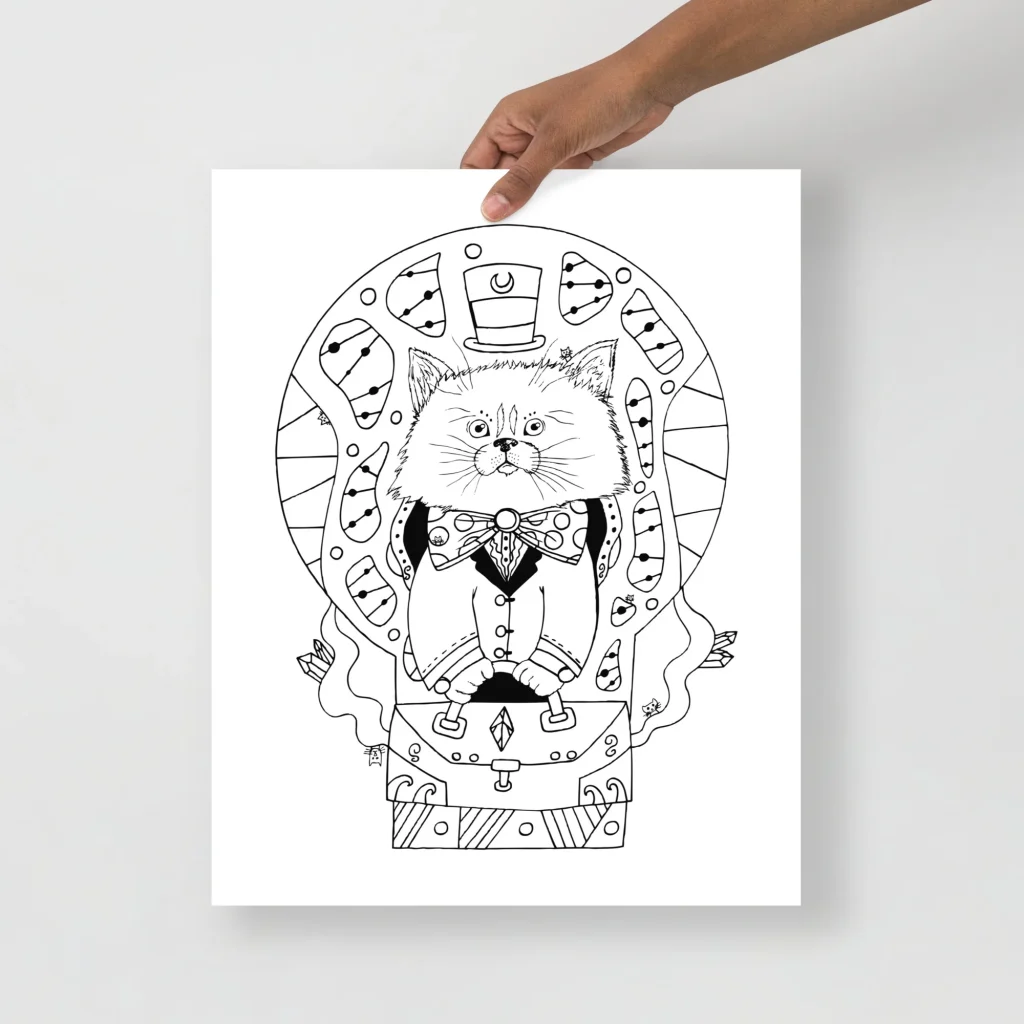
At the end of the day, that is what keeps me drawing. Cats come and go through our lives faster than we would like, and a single honest portrait can hold a personality long after the moment has passed. If my lines can keep a little of that spirit alive — that quiet authority, that mischief, that warmth — then the work has done exactly what I hoped it would.