I still remember the first time a circle refused to behave for me. I was a young kid, maybe eight, trying to draw a perfect sun in the corner of a school notebook, and no matter how slowly I moved my pencil, the line wobbled and met itself with a little hitch. I erased it, tried again, erased it again. Decades later, after more than thirty years of drawing, I can tell you that the circle is still the shape that humbles me the most — and the one I keep coming back to.
Few shapes have captured the human imagination as completely as the circle. From the earliest marks our ancestors pressed into stone to the boldest contemporary work being made today, the circle endures as one of the most powerful and emotionally resonant forms in all of visual art.
So why has circle drawing obsessed artists from cave painters to modern creators?
The answer runs deeper than beauty. When humans first pressed ochre to cave walls 40,000 years ago, they drew circles to stand for the sun, the moon, and the eye. That is why abstract line art still connects us to something fundamental in human consciousness — our recognition of cycles, of wholeness, of infinity.
What modern artists have done is take that ancient impulse and shape it into sophisticated visual languages that speak directly to the contemporary soul.
Kandinsky’s Revolutionary Circle Shape Drawing
When Music Became Circles
Wassily Kandinsky believed abstract circle art could produce the same emotional impact as music. His groundbreaking “Circles in a Circle” (1923) proved that a circle shape drawing could carry profound meaning without representing anything literal at all.
His way of thinking through ideas with circles included:
- Overlapping transparencies that create depth
- Color relationships that produce emotional harmony
- Size variations that suggest movement
- Placement that builds visual rhythm
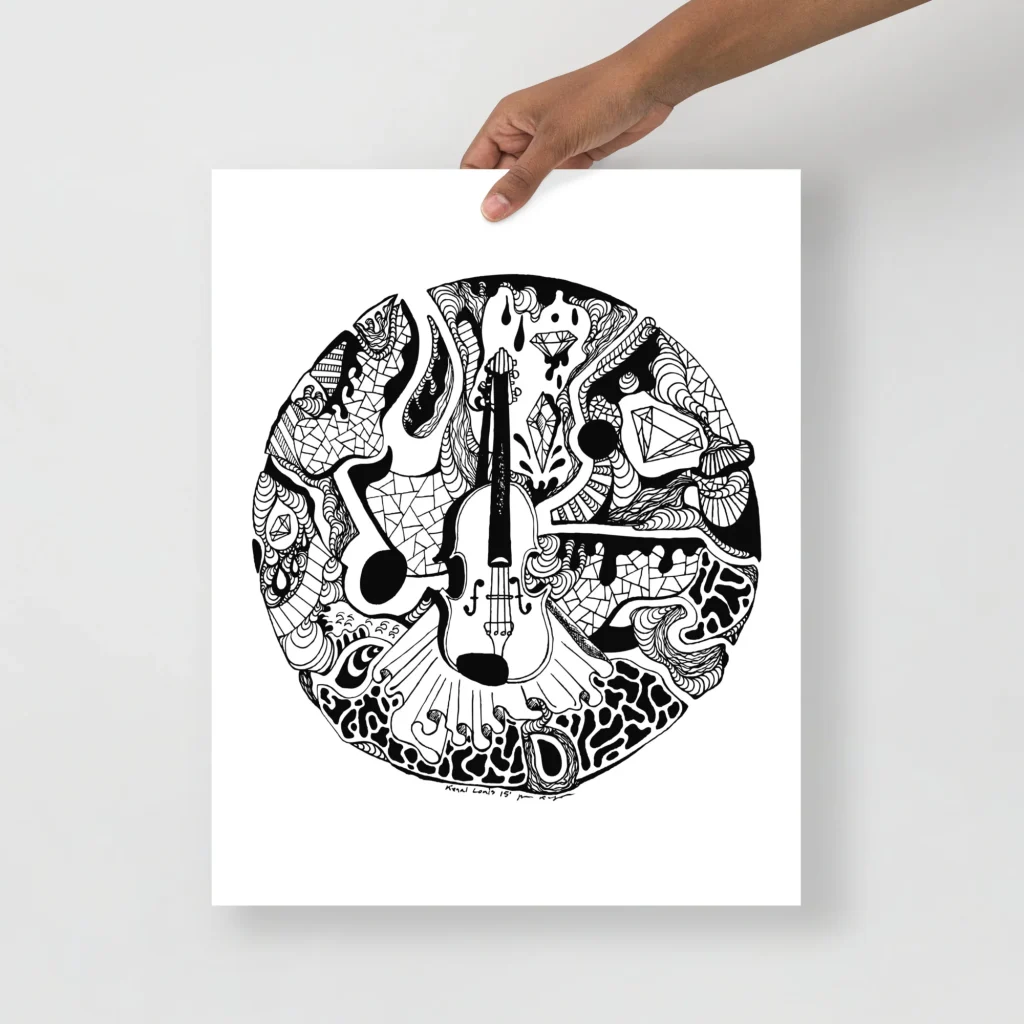
Kandinsky showed that a circular composition could stand on its own as a complete artistic statement, opening the door for generations of circle-obsessed artists. My own Circle of Music Wall Art Print draws straight from this tradition — the circular form becomes a stage where color, rhythm, and visual energy perform together, the same way a musical score organizes sound into something that lifts you.
Yayoi Kusama’s Infinite Dot Universe
Obsession Becomes Art
The Japanese artist Yayoi Kusama turned personal hallucinations into circle drawing ideas that conquered the art world. Her dots are never just decoration — they stand for infinity, obliteration, and cosmic connection.
Her circle pattern approach leans on:
- Repetition that creates meditative states
- Scale shifts from microscopic to room-sized
- Color combinations that trigger psychological responses
- Density changes that bend our sense of space
Kusama proved that one simple circular motif, repeated endlessly, could build entire universes of meaning. That truth resonates with me every time I work with circles. There is something almost hypnotic about returning to the same form over and over and discovering it is never quite the same twice.
Robert Delaunay’s Orphic Circles
Color Theory in Circular Motion
Delaunay’s circle abstract art explored how colors interact inside circular boundaries. His “Rhythm” series showed that working within a circular format could capture light, movement, and urban energy all at once.
His bold approach proved that circular forms could:
- Hold several perspectives at the same time
- Express musical rhythms visually
- Create movement through forms that never move
- Bridge representation and abstraction
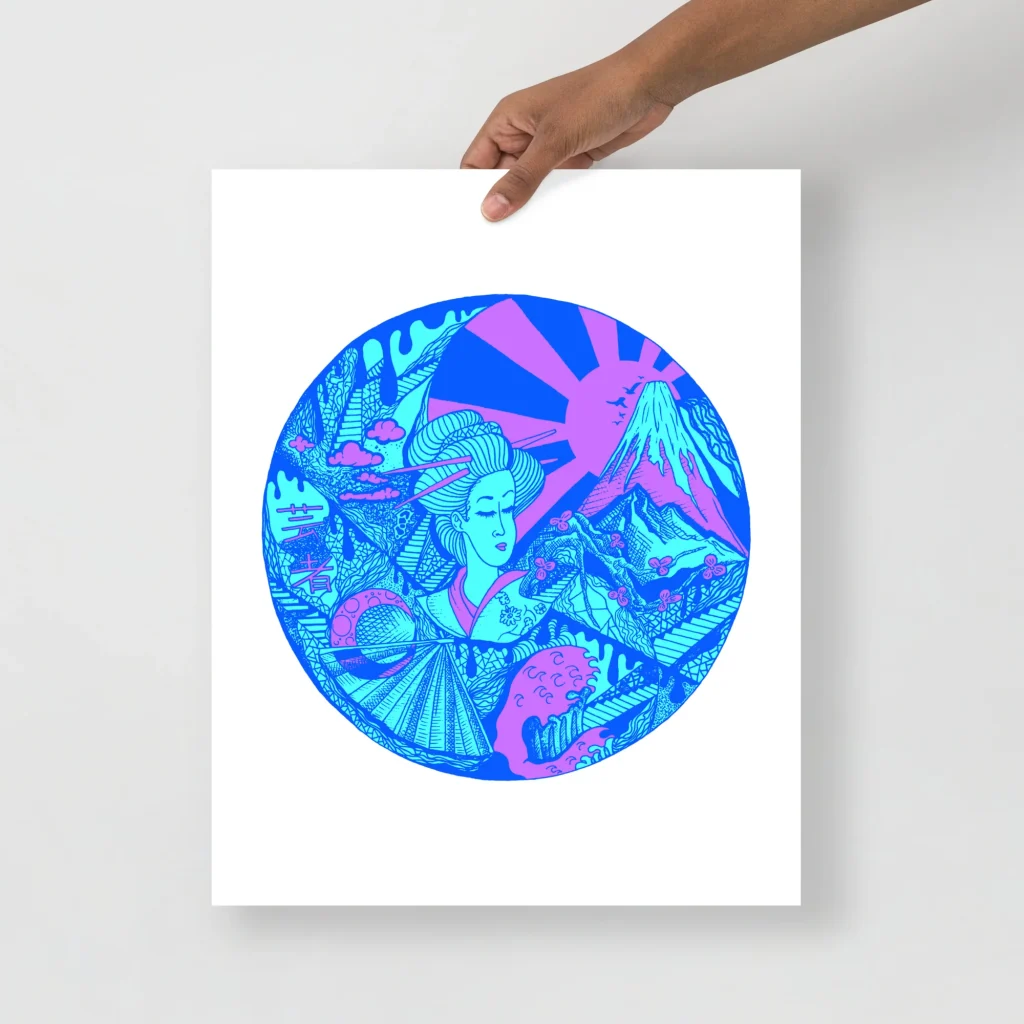
Delaunay established the circle as a vehicle for pure visual sensation. You can feel that same pursuit of movement and light in my Blue Circle Art Print Japan Abstract Wall Art — the layered circular forms and shifting blue tones are my way of chasing the vibrating energy he spent a whole career trying to pin down.
Contemporary Circle Drawing Renaissance
Why Today’s Artists Return to the Circle
Modern artists keep exploring the circle because the shape offers possibilities nothing else does. Working today, creators find that circle art gives them:
Psychological Impact: Circles stir feelings of completeness, protection, and continuity that rectangular art simply cannot reach. Looking at circular art seems to wake up different parts of us than sharp, angular shapes do.
Compositional Challenge: Building a balanced circle shape drawing demands mastery of radial composition, which pushes an artist far beyond the comfort of rectangular thinking.
Symbolic Versatility: From mandalas to cosmic imagery, circles carry universal meanings while staying wide open to personal interpretation.
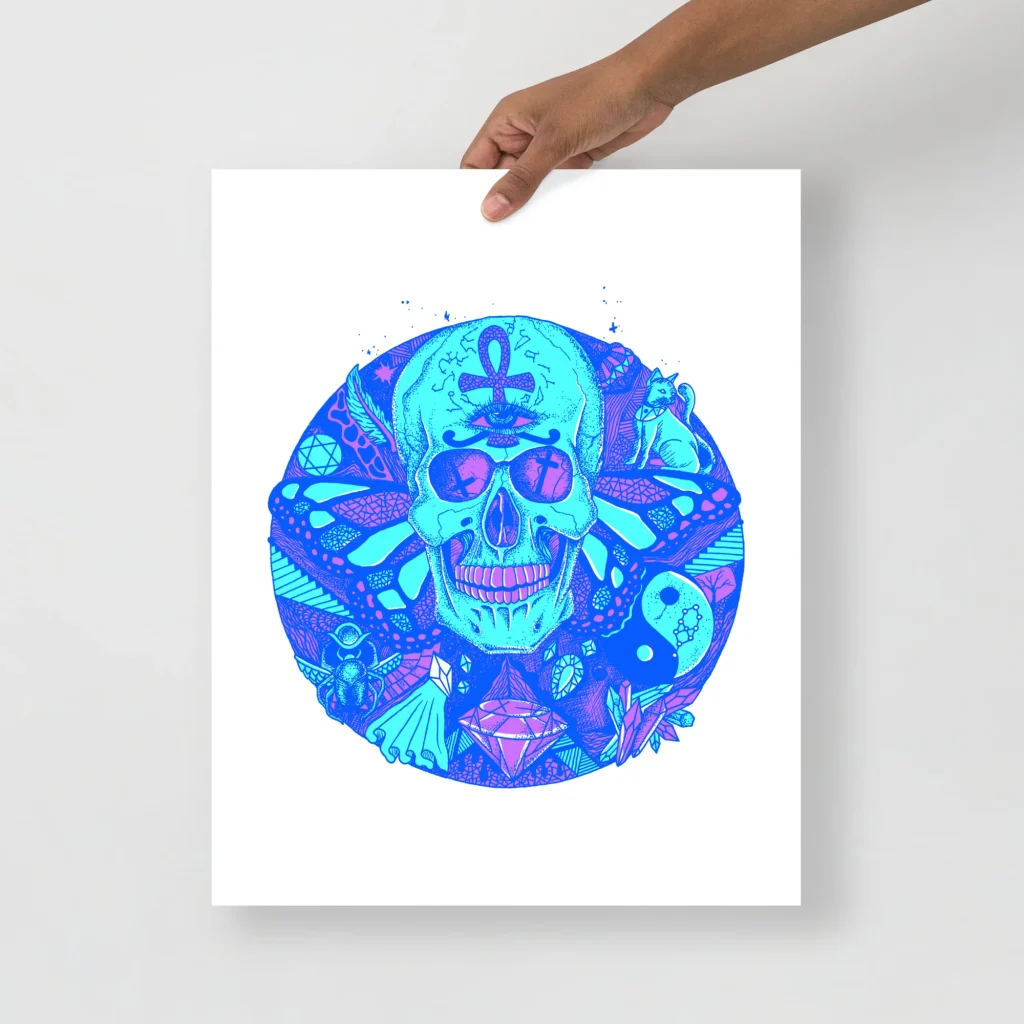
My Blue Circle of Humanity abstract art Print is a direct expression of that versatility. The circular composition holds figures and forms in a kind of shared orbit — a visual metaphor for the invisible bonds that connect people across distance and difference. The circle does not just frame the idea here; it is the idea.
The Fairy Circle Drawing Phenomenon
When Whimsy Meets Geometry
The rise of fairy circle drawing marks a fascinating moment where mystical themes meet geometric precision. These pieces blend storytelling with formal composition, making art that speaks to both the imagination and the intellect.
Artists working in this style often fold in:
- Botanical elements that hint at natural cycles
- Mythical creatures held inside circular boundaries
- Hidden details that reward a slow, close look
- Layered meanings, from playful to profound
These works act as both decorative pieces and quiet meditation tools. The circle becomes a portal — a soft boundary between the everyday world and something more mysterious and alive.
Why Circle Pattern Drawing Dominates Home Decor
The Psychology of Living with Circles
Interior designers increasingly reach for abstract circle art because circular forms create specific psychological effects in a living space. Still, not every circle works equally well in every room.
In Living Rooms: Large circular pieces in warm colors create welcoming focal points that pull people together and get conversation going.
In Bedrooms: Soft, flowing circle abstract art promotes rest and dreaming, especially pieces built on gentle gradients or nature-inspired patterns.
In Home Offices: A precise, geometric circle pattern sharpens focus, while the circular form softens the rigidity that so often breeds stress.
In Meditation Spaces: Intricate circular detail offers a visual anchor for contemplation, somewhere for the mind to settle.
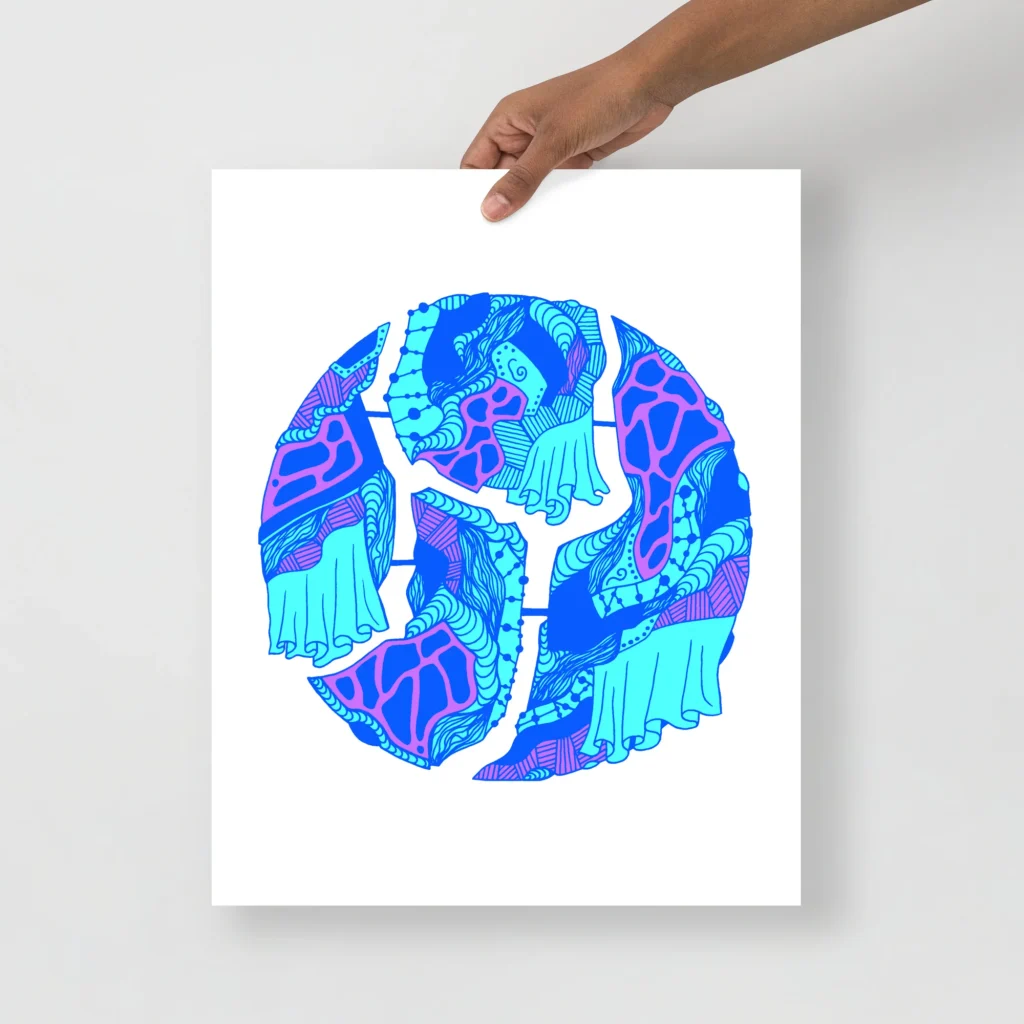
My Circle of Connection blue abstract art Print works beautifully in living spaces precisely because the composition radiates outward from its center. It draws the eye in and then releases it gently, creating a sense of calm expansion that makes any room feel more open and intentional.
The Technical Mastery of Circle Drawing
Creating abstract line art calls for specific skills that separate serious artists from casual doodlers, especially when the work depends on confident circular composition. The unforgiving nature of the circle exposes any technical weakness instantly.
The artists who truly command this form understand:
- How to create movement within stillness
- How to balance negative and positive space
- How to guide the eye along circular paths
- How to build depth without traditional perspective
Working inside circular constraints often produces more inventive solutions than an unlimited rectangular canvas ever would. There is something clarifying about the limitation. The circle tells you exactly where the edge is, and everything you do inside that boundary has to earn its place.
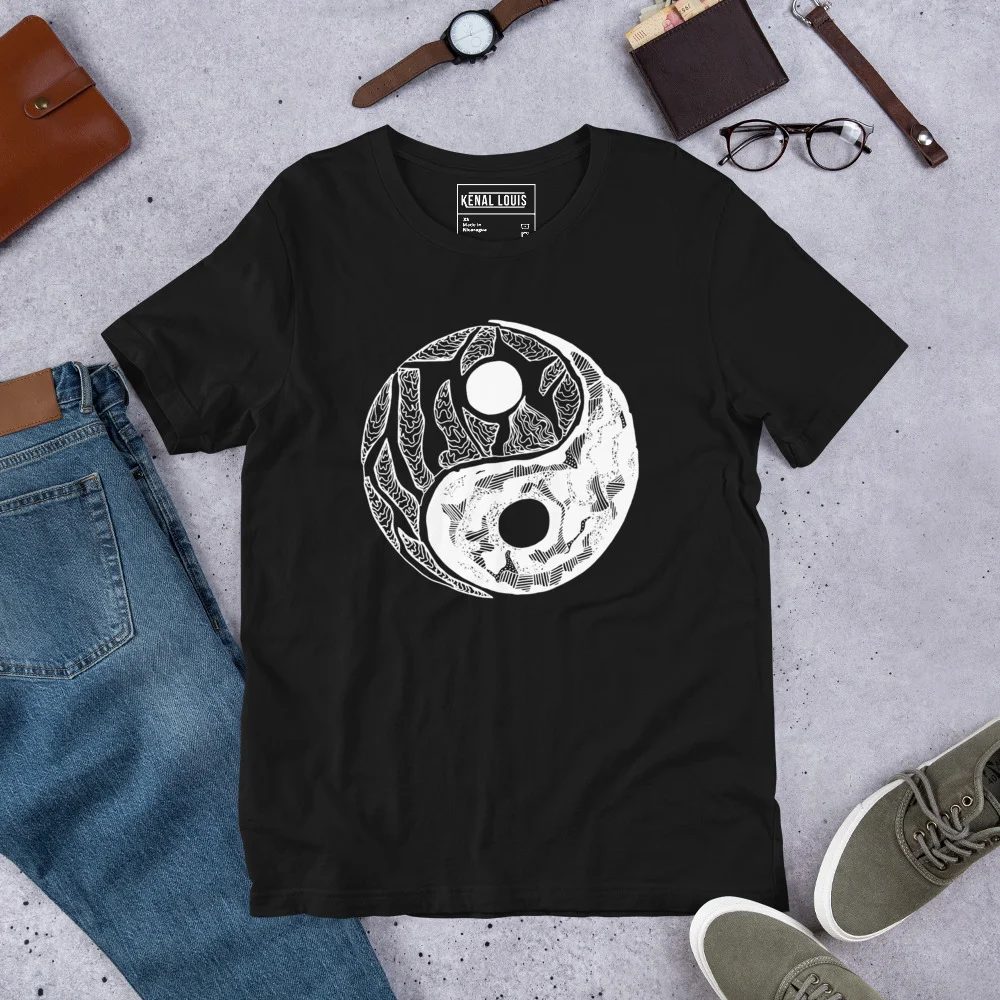
The Yin Yang T-Shirt — Circle Line Art Graphic Tee is a perfect example of how restraint inside a circular format can produce something quietly powerful. The line work is precise and deliberate, and the yin yang structure gives the composition a built-in balance that feels both ancient and completely fresh. Wearing a piece of circle art becomes its own kind of statement — it carries the geometry out into everyday life.
Collecting Circle Art: Investment and Inspiration
More and more collectors seek out circle shape drawing pieces because they offer aesthetic appeal and lasting value at the same time. Circular artworks often hold their fascination longer than rectangular pieces, thanks to their relative rarity and their symbolic pull.
When you are weighing a circular piece for a collection:
- Look for genuine precision in the line work
- Test the compositional balance from every angle
- Search for symbolic depth beneath the surface beauty
- Notice how the piece shifts in different lighting
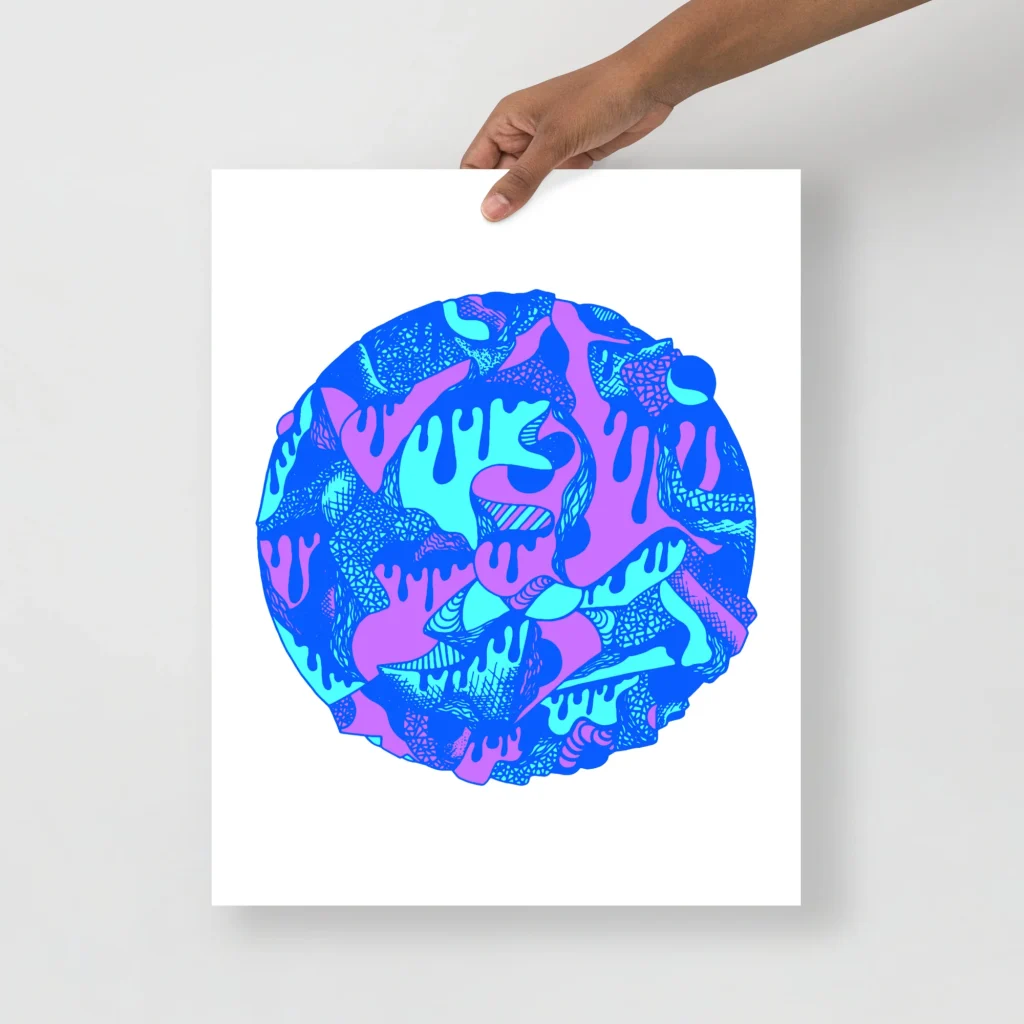
A well-made abstract circle becomes a conversation starter, a meditation aid, and a valued possession all at once. My Blue abstract art Print — Circle of Drip Wall Art rewards exactly that kind of close, repeated looking. The drip elements pour an organic unpredictability into the circular structure, so the composition feels alive — controlled and spontaneous at the same time. That tension is what makes it a piece you can live with for years and still see something new.
The Future of Circle Drawing
As digital tools widen what is possible, circle drawing keeps evolving. Even so, hand-drawn circular art holds a special place, because, as I have seen firsthand, abstract line art transforms a geometric form by revealing the human touch in every slight imperfection.
The artists pushing this forward are:
- Blending traditional and digital techniques
- Exploring new materials and surfaces
- Building interactive circular installations
- Developing personal symbolic languages inside the circle
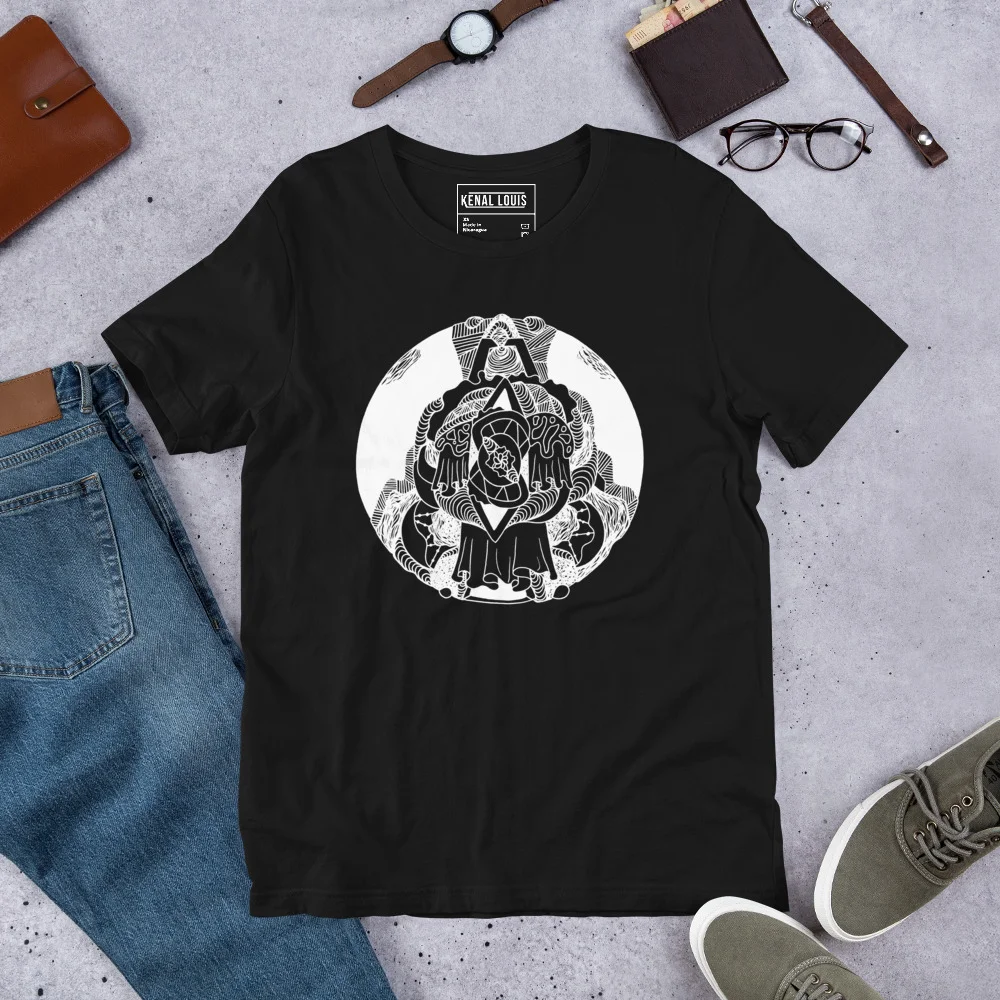
The Circle Ornament Graphic Tee, Line Art Cotton T-Shirt is exactly this kind of evolution — taking the timeless vocabulary of circle line art and translating it into something you can wear. The ornamental detail inside the circular structure gives it a richness that rewards a close look, while the overall composition still reads clearly at a glance. It is circle art that travels through the world with you. A tee like this also makes a thoughtful, personal gift — I have had buyers pick it up for a brother, a best friend, or anyone who appreciates art that carries quiet meaning rather than a loud logo.
So the circle remains as vital today as it was in those prehistoric caves.
Transform Your Space with Timeless Geometry
Ready to discover the power of circle drawing in your own space? Explore my collection of contemporary circle art that honors these old traditions while speaking to modern sensibilities. From intricate circular patterns to bold abstract work, I make pieces that connect with a wide range of personal tastes. Whether you are drawn to the meditative calm of geometric precision or the warmth of flowing, organic forms, circular art has a remarkable way of turning a room into a sanctuary of meaning. And like that stubborn little sun I kept trying to draw as a kid, each piece in my collection is made with the hope that it will only grow richer the longer you live with it — the line finally closing, the circle finally whole.